
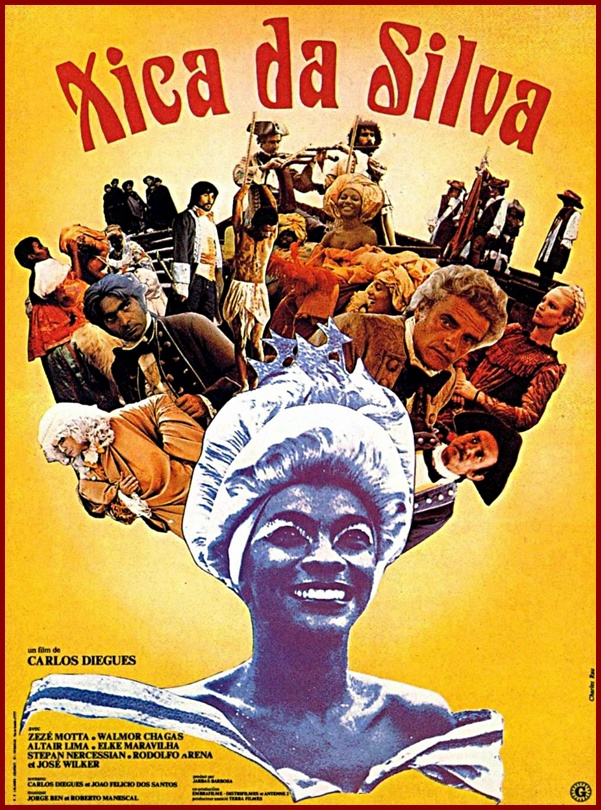
In 1976, Zezé Motta delivered one of the most striking performances in Brazilian cinema by bringing Francisca da Silva de Oliveira to life in Carlos Diegues’ “Xica da Silva”. The role earned her Best Actress awards at the Brasília Film Festival, the Moliere Prize, and the Air France Prize, solidifying her career as an actress, singer, and one of the most important voices in Brazil’s anti-racist movement.
In this interview for Tropical Alien, Zezé reflects on building the character, the physical work involved, the balance between comedy and social critique, and the meaning of the film’s ending.
Synopsis: In the second half of the 18th century, the enslaved Black woman Xica da Silva (Zezé Motta) becomes the center of attention in the Diamond District, where the country’s richest mines are located. João Fernandes (Walmor Chagas), representative of the Portuguese Crown, falls in love with Xica and transforms her into the Diamond Queen, satisfying all her extravagant desires. Alerted by the couple’s enemies, the King of Portugal sends an emissary to prevent Xica’s power from growing in the colony.
It’s fascinating to observe the character’s magnetism on screen and how it affects not only those around her but also the viewer. Xica has this indomitable, powerful main character energy that finds charisma not necessarily through altruistic actions, but through the audacity of what she does and how she challenges power relations—and it’s these contradictions that help form her complexity. How did you approach interpreting Francisca da Silva de Oliveira, a historical figure, to transport her into the context of a work of historical satire?
Look, playing Francisca da Silva de Oliveira was a turning point in my life. Because what was there wasn’t just a character—it was a real, historical Black woman who navigated the 18th century defying all the power structures of a slave society. When I received the invitation to play Xica, I understood that I couldn’t judge her. I needed to understand her. Xica is made of light and shadow, of contradictions, of desire for power, of survival, of strategic intelligence. She’s not a classic heroine, altruistic and pure. She’s audacious. And that audacity was revolutionary.
To build her within a historical satire, I needed to find the balance between that woman’s human truth and the almost baroque, exaggerated, ironic tone of the work. Satire allows you to amplify gestures, looks, silences. But the emotion needed to be real. I always started from feeling—from her loneliness, her survival instinct, her awareness that she was occupying a place the system said wasn’t hers.
Xica challenges power relations with intelligence and sensuality, but also with irony. And I gave myself completely to that. It was a very intuitive construction, but also very political. Because every scene carried a provocation. I think the magnetism comes precisely from those contradictions. Xica doesn’t ask permission. She occupies. And that, even today, disturbs and fascinates.
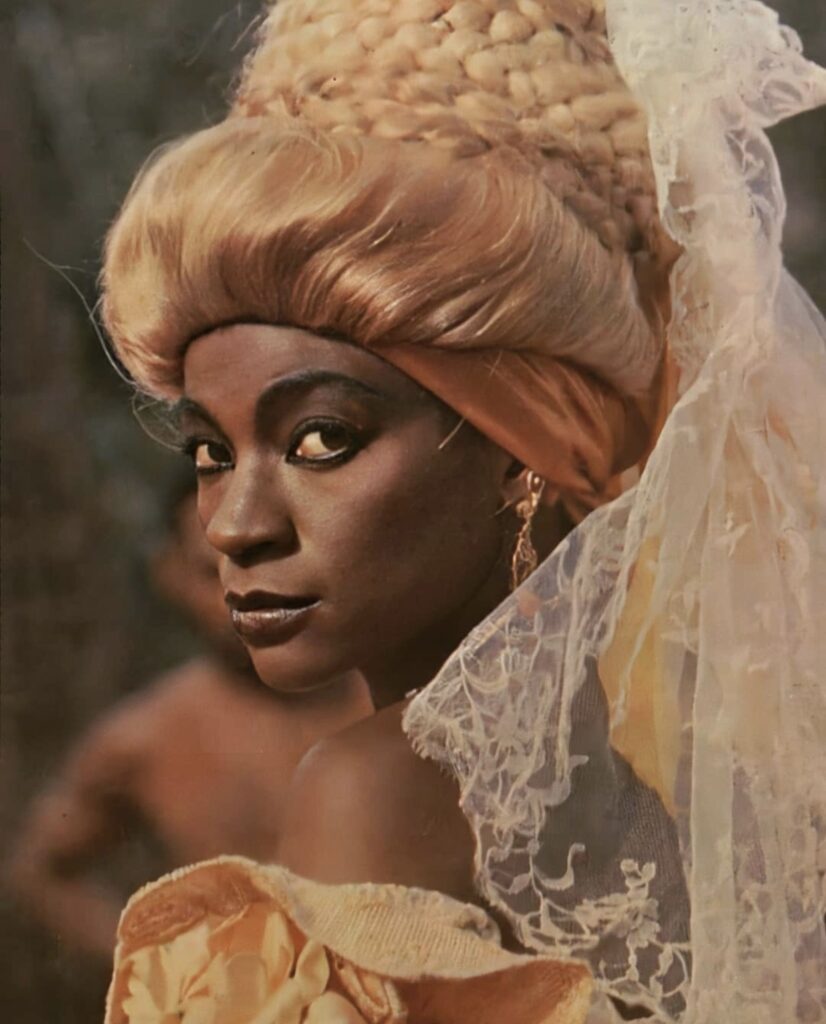
Something striking about the film is Xica da Silva as a kind of femme fatale, an overwhelming presence that causes tension and disruption in her surroundings. She provokes this through subversive actions, but before that, basically through her presence alone, like an entity. How did you work on her physicality—from her everyday movements to how she moves in those moments when she’s causing these “seismic shocks” around her?
This question is wonderful because it speaks to the body, and in my case, the body has always been political territory.
When I went to build Xica, I understood that even before she spoke, she needed to occupy space. Her body was language. It was affirmation. It was affront. So I worked a lot on posture, on the gaze, on the pace of walking. Xica doesn’t cross through an environment—she makes the environment reorganize itself around her presence.
In everyday movements, I sought an almost feline naturalness, something instinctive. But in moments of provocation, of “seismic shock” as you said, there was absolute awareness of the power she wielded. Her silence was as important as her speech. Sometimes just a chin lift, a slower turn, a gaze held for one second longer. There was also sensuality, but not a sensuality meant to please. It was strategic sensuality, almost like a weapon. Xica understood that her body was read as an object in a slave society. So she subverts that: she transforms that body into an instrument of power.
And that demanded courage from me. Because I knew I was putting on screen a Black female body that didn’t apologize for existing, for desiring, for having ambition. It was a presence that destabilized. And continues to destabilize.
Xica’s physicality was built in that place: between instinct and political consciousness. Between the woman and the myth.
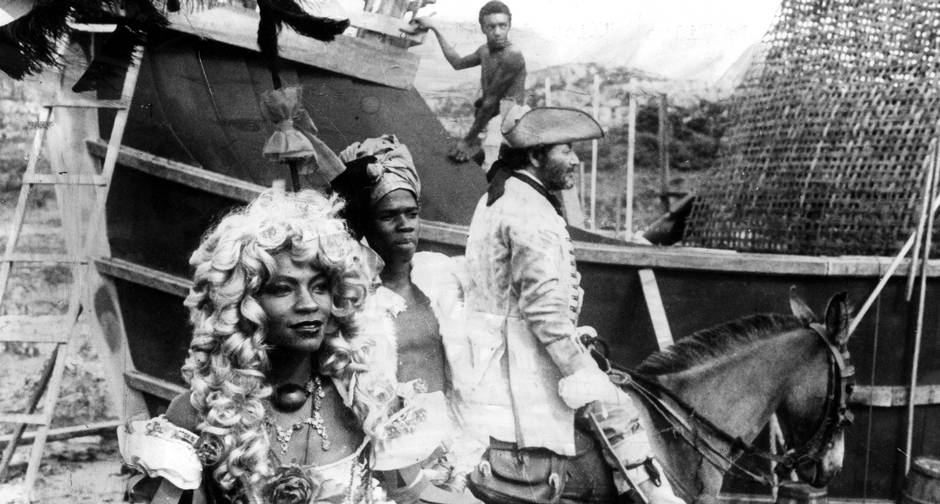
The film has moments that aim to be comic, but through historical understanding reveal absurdities and revolting aspects of that period. How did you think about these genre tones during the filmmaking process?
When I was making the film, I understood that the laughter was never innocent. The comedy came almost like a trap. You laugh and suddenly realize you’re laughing at something profoundly violent, absurd, structurally cruel. That’s the power of satire. For me as an actress, the challenge was not to “force” the comic. I never thought: “this is funny.” I thought about the truth of the situation. Often, the baroque exaggeration, the grotesqueness of power relations, already contained the humor. And that humor exposed the ridiculousness of the elite, of hypocrisy, of the slave structure.
Xica lives on that delicate line between mockery and denunciation. She laughs at the system while being crossed by it. And that required very careful tone work. Because if I leaned too heavily to one side, I’d lose the political dimension; if it were only denunciation, I’d lose the potency of satire. I think the film uses humor as a critical instrument. The laughter there is almost a scandal. It reveals. It exposes. It disturbs. And I always kept very clear that behind any apparently light moment, there was a deep layer of historical pain. My job was to honor that complexity.
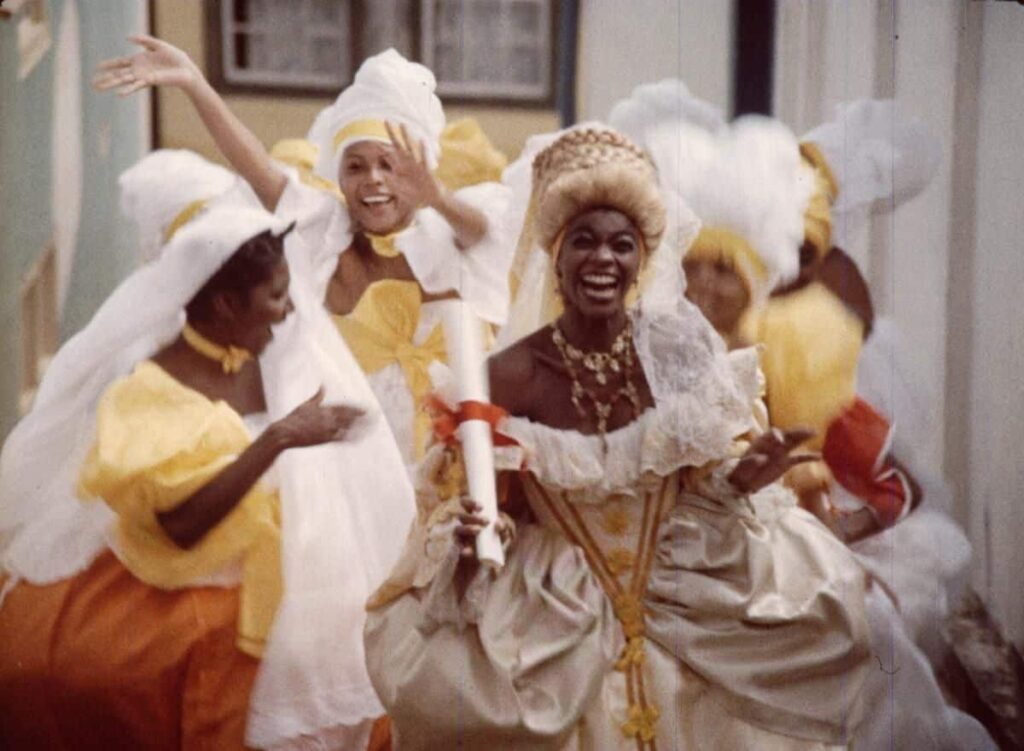
The banquet scene with José Wilker ends up being one of the most iconic among so many others, also because it’s basically all conducted through actions and music, without dialogue. How was the preparation with Wilker specifically for that sequence?
The banquet scene is really special, because there everything is energy, rhythm, and tension. There are no words to “save” us. Only the body, the gaze, the breathing, and the music. Working with José Wilker was a gift. Wilker was an extremely intelligent actor, generous and very attentive to the scene’s interplay. For that sequence, we rehearsed as if it were almost choreography. Every gesture had intention. Every pause had meaning. Since there was no dialogue, we needed to be absolutely connected. It was almost like dancing without touching. A game of seduction, provocation, and power. Who leads? Who yields? Who observes? That scene is a duel, but an elegant, ironic duel, loaded with subtext.
The preparation involved a lot of looking. Holding a gaze is an act of power. And we knew there was an enormous symbolic dispute there: race, class, desire, domination. All without a single word.
I remember there was a very concentrated silence on set. Because everyone understood that scene needed to breathe. The music conducted, but the tension came from the relationship between the two of us.
And maybe it became so iconic precisely because of that: when words leave the scene, the body speaks louder. And Xica always knew how to speak with her body.
The ending is one of the moments that stayed with me, with Xica taking refuge in the convent she herself had ordered built as a collective space. That’s also where she hides José, another act of solidarity. What’s your interpretation of that ending?
The ending has always moved me deeply. Because there we see a woman who spent the entire film facing the world with audacity, sensuality, strategy… but who, in the end, chooses retreat. And it’s not a retreat of defeat. It’s a retreat of consciousness. That convent, which she herself had built as a collective space, is almost a gesture of historical reparation. It’s as if Xica were saying: “I played the power game, but I also know how to build shelter.” There’s a very strong spiritual dimension there. A woman who went through excess, luxury, provocation, and ends seeking silence. And the fact that she hides José in that space is also very symbolic. It’s solidarity, but it’s also ambiguity. Xica was never a linear character. She loves, but she also competes. She protects, but she also controls. That final gesture carries all of that. For me, that ending speaks about permanence. The system tries to frame, expel, silence. And yet, Xica remains. No longer at the center of the spectacle, but in a space she herself created. It’s almost a metaphor about autonomy. In the end, she’s not expelled from history—she chooses where she wants to be within it. And that, for a Black woman in that context, is profoundly revolutionary.
Where to watch Xica da Silva:

Credits
Director: Carlos Diegues
Screenplay: Carlos Diegues, João Felício dos Santos, Antonio Callado
Cinematography: José Medeiros
Production Design: Luiz Carlos Ripper
Editing: Mair Tavares
Sound: Luiz Carlos Saldanha
Music: Jorge Ben Jor, Roberto Menescal
Executive Producer: José Oliosi
Producer: Jarbas Barbosa
Co-production: Embrafilme, Hélio Ferraz
Cast: Zezé Motta, Walmor Chagas, José Wilker, Altair Lima, Elke Maravilha, Stepan Nercessian, Rodolfo Arena, Marcus Vinícius, João Felício dos Santos, Dara Kocy, Adalberto Silva, Julio Mackenzie, Beto Leão, Luis Motta, Paulo Padilha, Baby Conceição, Iara Jati, Alberto Patu, Luis Felipe, Derly Barbosa, Antônio Pompêo, Clementino Kelé, Tony Ferreira
Production: Terra Filmes, Embrafilme, Jarbas Barbosa Produções Cinematográficas, Distrifilmes
Genre: Comedy Drama
Country: Brazil
Year: 1976
Runtime: 107′