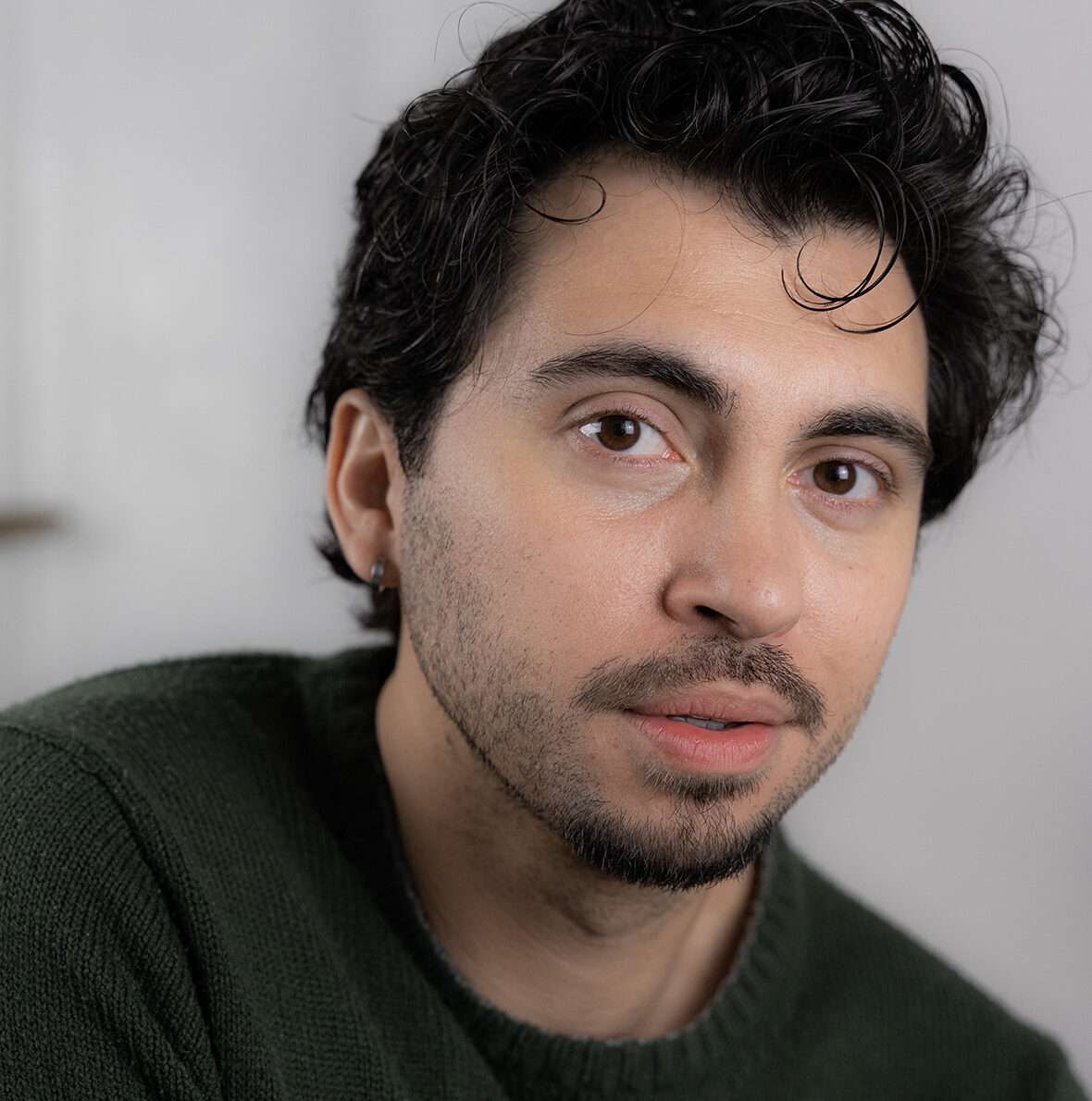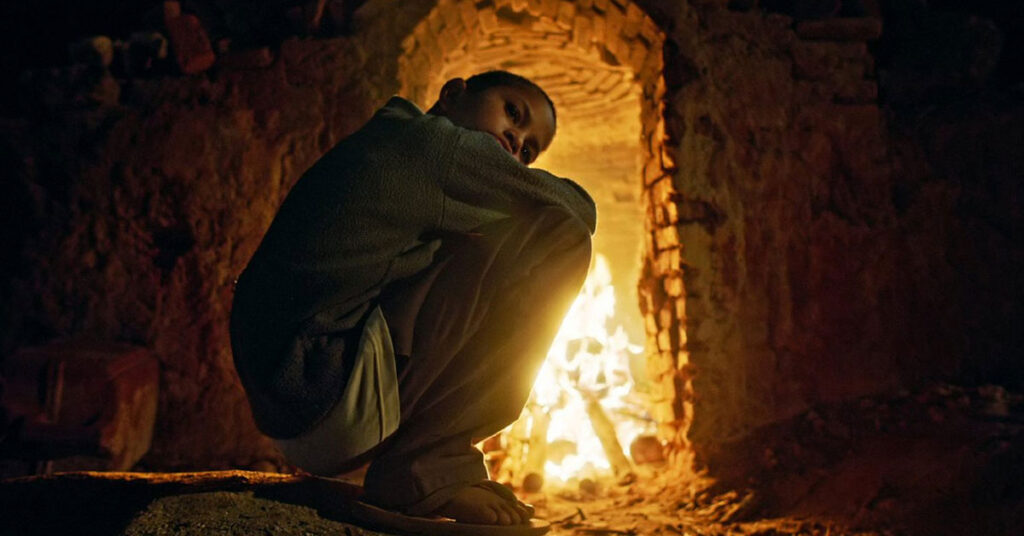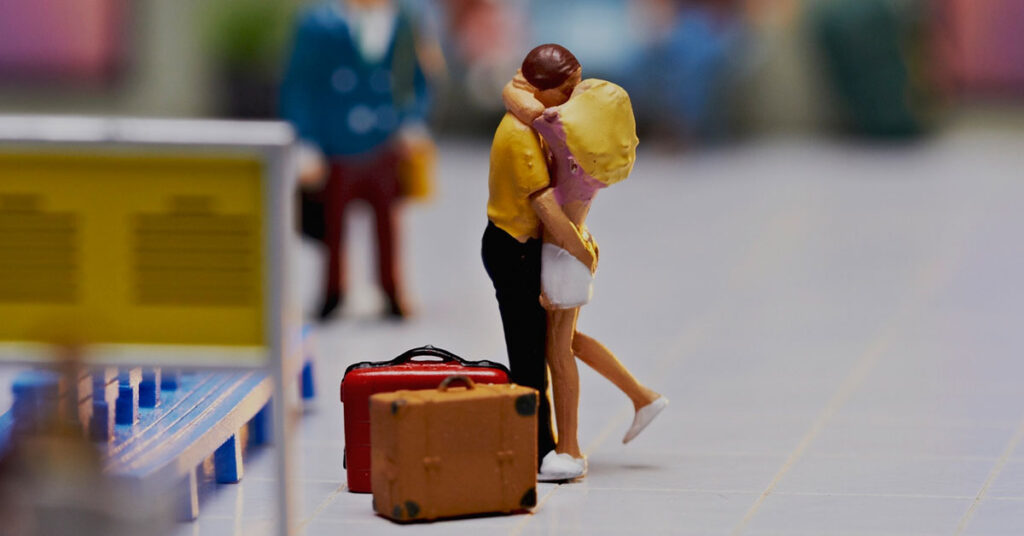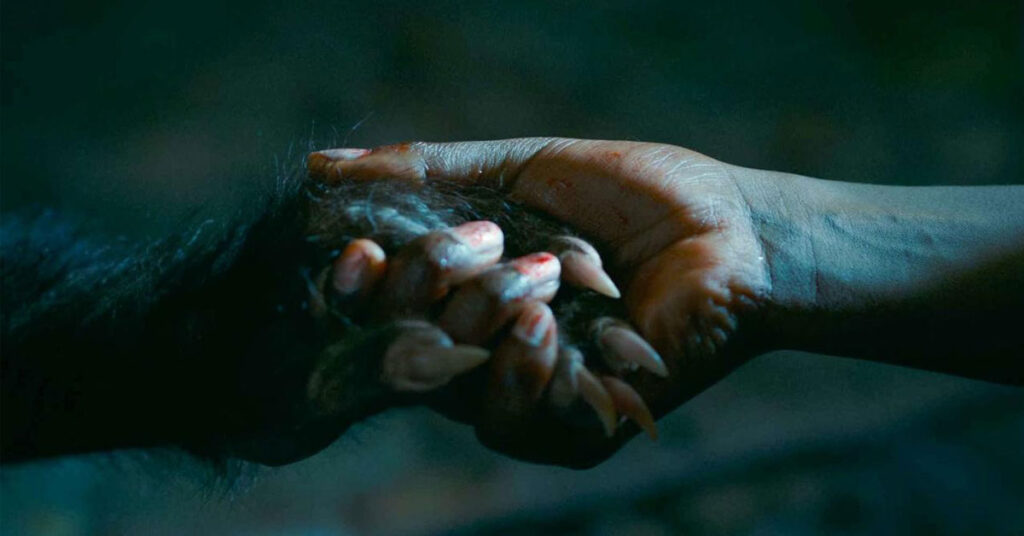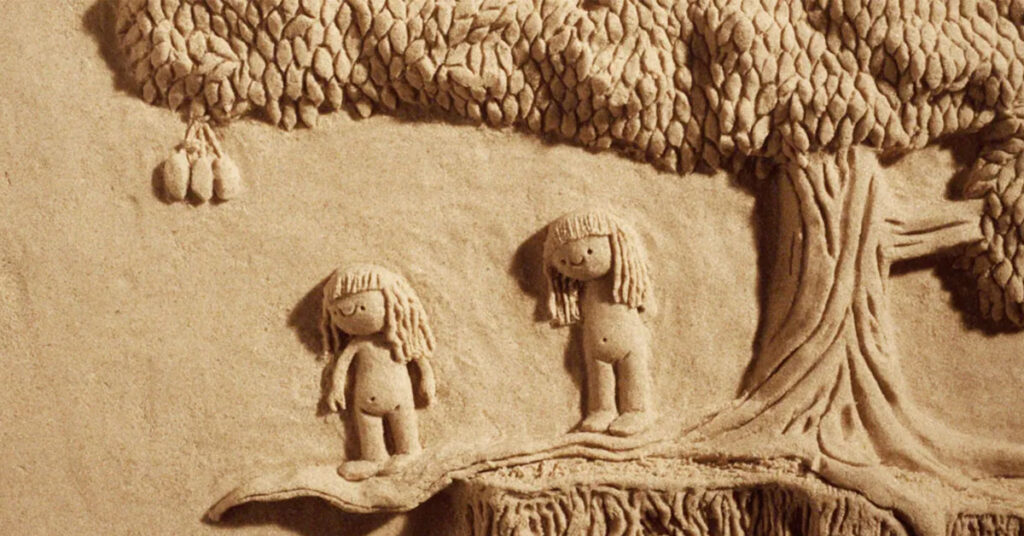
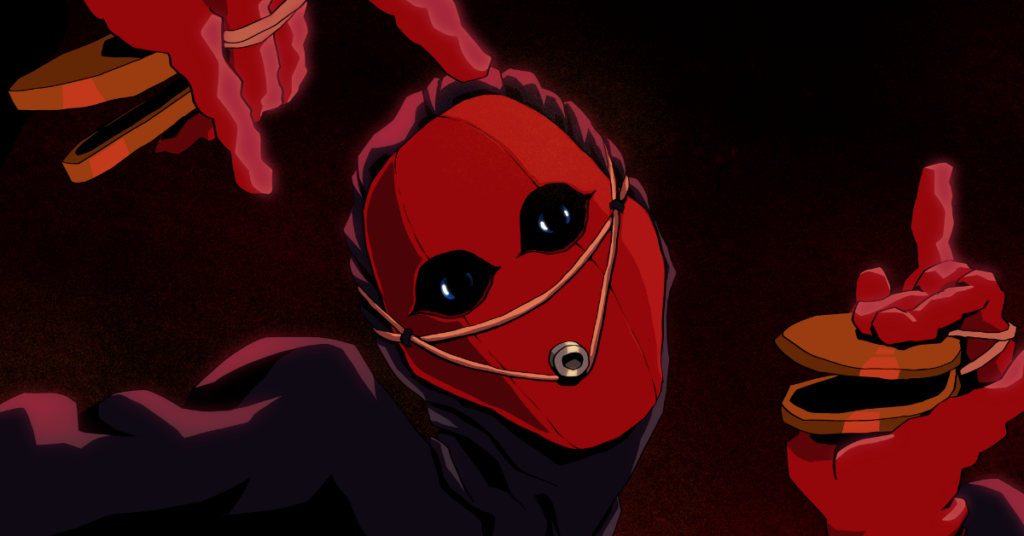
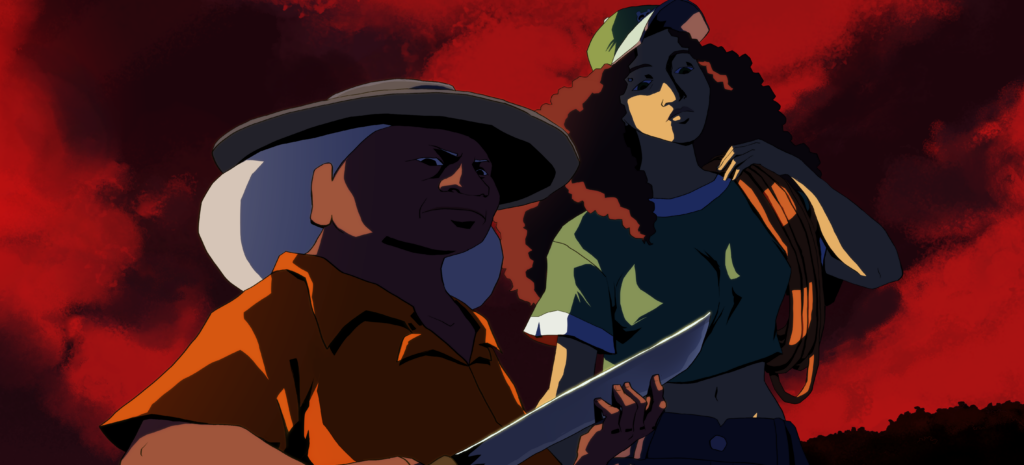
Marília Mafé has a long-standing relationship with the Papangus. The masked figures of Pernambuco’s carnival — which both fascinated and terrified her as a child — became the starting point for Tibungo, her first self-authored animated feature, currently in development with the support of Rumos Itaú Cultural and Spcine. An adult horror film, it follows Dona Antônia, a woman who for years surrendered her dreams to a creature that emerges from her well, until the day that creature takes her granddaughter. A director, screenwriter, and storyboard artist with over ten years of experience in animation, Mafé talks here about fear, memory, and the challenge of making adult animation in Brazil.
1. The figure of Tibungo is born from a very specific fear from your childhood: the Papangus, masked figures from Pernambuco’s carnival, with their strange movements, castanet rhythms and an identity never revealed. How did you go about revisiting that memory and turning it into a narrative element?
As someone from Pernambuco, Carnival carries an enormous weight in my cultural upbringing. I feel that Pernambuco’s Carnival has many mysterious elements, so to speak. A lot of it feels like a dream. And since Tibungo is a creature of dreams, I gradually made that connection until I arrived at the Papangus. Tibungo is not a Papangu. He can take on any form that has ever been dreamed. That’s the form he takes in the film. I believe that this aesthetic and the way he moves contributes to the atmosphere and tone of the film and helps build the cultural environment of Pernambuco in a more tangible way. I’ve always been curious about the movements, gestures and sounds of the Papangus, and animation allows you to study those things in detail, bringing that sense of mystery and suspense to strengthen the narrative.
2. The teaser reveals a very particular way of moving for Tibungo. Were there other references that helped you arrive at that specific physicality, beyond the Papangus?
The Papangus were definitely the main movement reference, but I also looked closely at the movements of the character Inu-Oh, from Masaaki Yuasa’s film of the same name.
3. Curiously, there’s a creature in Minas Gerais folklore called Tibungue — similar to the Saci, completely distinct from your character but with an almost identical name. Was there anything about that figure that inspired you? Where did the creature’s name come from?
I didn’t know that creature. I’m finding out about it right now, haha. The name Tibungo actually came from a Luiz Gonzaga song called “Respeita Januário.” He opens the song by telling a story, and at one point he uses the word “Tibungo” as an onomatopoeia for the sound a gourd makes when it enters water — that movement of air and water. Like a plunge.
I found the concept beautiful for the character, who needs to plunge into memories and into her own unconscious, and I used that as the basis for a lot of the film’s conceptual work around water as an important element.
4. “Tibungo” is rated adult horror, 16+. That’s not trivial in a market where animation is still widely read as a synonym for family entertainment. What’s your view on the space animation can occupy as a language for adults?
The industry still treats animation as if it were a genre rather than a language, and that brings very concrete consequences. I’ve come across funding calls that separate budgets for fiction from budgets for animation, as if animation weren’t fiction. That kind of investment limitation holds back the field’s development. Animation is a difficult language to develop and refine, but it keeps being met with less funding and fewer spaces.
This idea of boxing animation into the children’s category is another strong limitation in the Western market, creating even more barriers to what gets produced. The decision to classify Tibungo the way we did is definitively going against that. In more mature markets, like Japan’s, audiences have been cultivated, and it’s easy to see adult animated films across very different genres — horror, drama, comedy, experimental. “Inu-Oh,” which I already mentioned, is one example.
In the West, this tendency to infantilize an audiovisual language makes it harder to build audiences. What isn’t offered is unlikely to be consumed. Since we still have so little space, both for producing and distributing animation aimed at adults, that audience ends up not forming — and the market reads that absence as a lack of interest. Looking at the Japanese market, where adults grew up consuming comics and animation without that prejudice, is important for rethinking how to strengthen animation in Brazil.
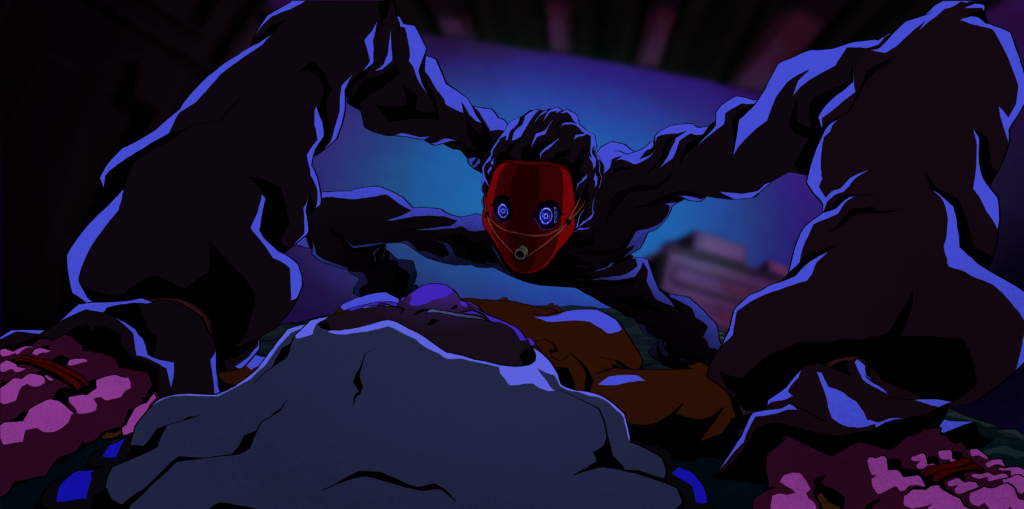
5. Dona Antônia is the protagonist, but she’s also, in a sense, the cause of the problem. For years she surrendered her dreams to Tibungo to free herself from nightmares — and it was that negotiation that created the conditions for Kelly’s kidnapping. Tibungo creates a cycle of dependency by worsening the nightmares of those he haunts, intensifying their desire to be rid of them. There’s an observation that circulates widely about intergenerational mental health: that we go to therapy because the previous generation didn’t. Does “Tibungo’s” screenplay go in that direction — with Dona Antônia having to finally face what she’s been carrying in order to rescue her granddaughter?
That’s definitely addressed! But I also try in the film to understand why so many people don’t confront their own issues. My hypothesis is that there’s a certain fragility in what people take to be their identity. When we understand who we are in very fixed terms, it becomes much harder to admit a mistake — and even harder to recognize that the mistake grew out of a worldview that needs to be rethought. Changing requires accepting that we’re not a finished version of ourselves.
The film also puts on the table that even when change happens, the consequences of past mistakes remain. Dona Antônia’s journey leads to this confrontation with stored memories, but it also passes through rediscovering concepts like family, friendship and truth, and learning to tend to the wounds that surely remain.
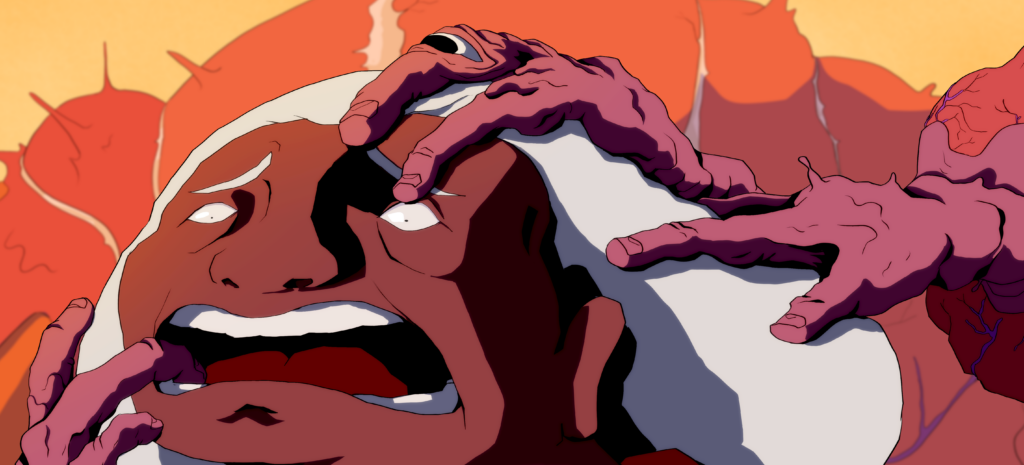
6. The sound design of the teaser carries three signatures: the score by Matheus Dalia and the sound effects by Davi Carturani and Beró. The castanet — which calls directly to the Papangus but sounds unexpected in a horror context — is one of the elements that stands out most. How did you approach that sonic construction?
From the moment I started thinking about the storyboard, I already knew I needed the castanets in the score. It’s the most distinctive sound of the Papangus. Beyond that, I really wanted us to use instruments typical of Pernambuco. So I went looking for a Pernambucan musician and found Matheus. With the storyboard cut into an animatic, I talked to Matheus about the instrumental elements I wanted to bring to the film and what I had imagined for each scene. We researched horror scores to understand the compositional foundations and map out directions, and Matheus started creating, bringing that Pernambucan instrumentation. So our violin is actually a rabeca. The percussion comes from atabaques and alfaias. Matheus brilliantly brought me this score with the castanets at its center. We adjusted a few things and I re-edited the animatic over the final score, creating some new shots I felt the score was calling for.
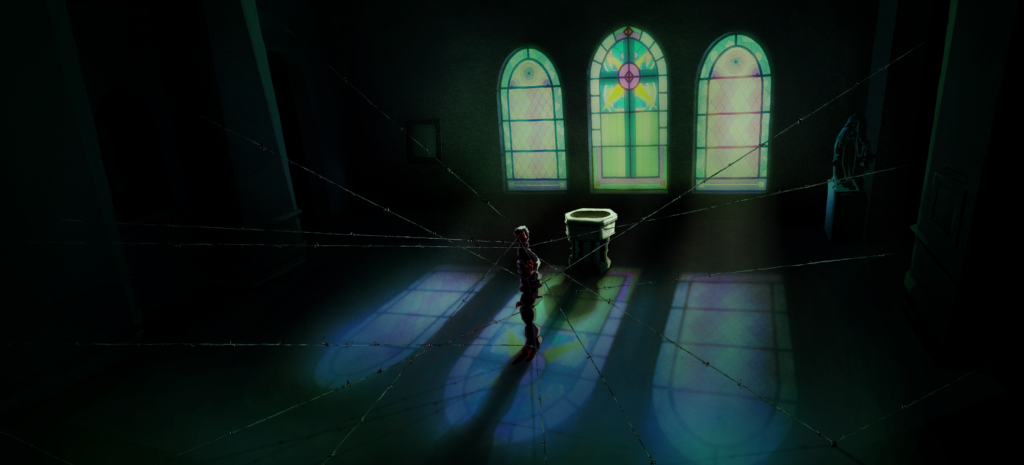
7. You describe the visual palette as inspired by Italian giallo — dark tones, strong and saturated colors. How does that register coexist with Pernambuco’s vibrant palette?
Contemporary horror is very desaturated and earthy. Black, gray, brown and red have become the hallmarks of modern horror. That palette has nothing to do with Pernambuco’s sun and carnival. But when you watch Dario Argento’s “Suspiria,” you start to understand that horror can have color. Strong light enters in a surrealist way. It’s not interested in realism or continuity. It’s interested in expression and intention. Those super vibrant neon colors are the face of Pernambuco.
The fit seemed perfect: I can achieve strong light that generates a very interesting high contrast for the genre, and bring in a higher saturation that, beyond carrying the vibrant palette, also works to give the surreal touch the film’s subject matter calls for.
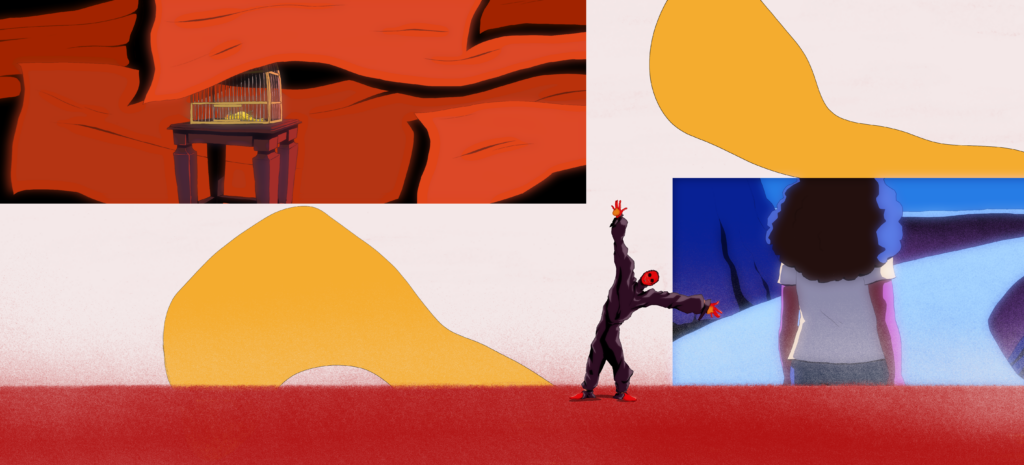
8. The project already has two important development grants behind it — Rumos Itaú Cultural and Spcine. How did you put together the team for the teaser, and what are the next steps toward the feature?
Finding the team was challenging precisely because in Brazil we don’t have much space to produce something like Tibungo. Even with over ten years working in animation, I had to design a process unlike anything I’d worked on before to get the teaser to come out the way it did. I went looking for talents one by one. Some I’d never worked with before, but it worked well. I preferred to have fewer people on the team, aligned with the style, so we could have more dialogue and refine the material slowly.
Now the next step is securing financing for the feature. I want to go through more script labs to review and refine the material, but in parallel I’m having conversations about how to raise the production budget. As I said, animation has less space and it’s harder to find the investment the film needs to maintain the quality of the teaser — but I’m looking for production companies willing to come on board.
9. To close, I’d like to ask for two recommendations of Brazilian films for our audience — features or shorts.
I’ll recommend the feature “A Cidade dos Piratas,” by Otto Guerra, and the short “Debutantes,” by Deley. Two very different styles of animation, incredible narratives, and reminders of what’s possible.
Credits — Tibungo
Creation and Direction: Marília Mafé
Screenplay: Marília Mafé, Tereza Temer
Script Assistant: Bruno Antônio
Production: Marília Mafé
Production Assistant: Larissa Uehara
Production Design: Marília Mafé
Storyboard and Layouts: Marília Mafé
Set Design: Marília Mafé, Roberta Bravo
Animation (Rough, In-betweening and Tie-down): Geovani Angelo, Andrew Gledson, Carlos Iubel, Deley, Pedro Solano
Cleanup and Color: Maria Petrassi, Pedro Solano, Sofia Medradro
Compositing and Editing: Artemis Lyrae
Score: Matheus Dalia
Sound Effects: Davi Carturani, Beró
Genre: Horror / Drama
Rating: Adults — 16+
Country: Brazil
Status: In development