Why we recommend it
Review
Many directors have seized the opportunity to revisit a short film from early in their careers in feature-length format. Jennifer Kent, for instance, did so with “The Babadook,” adapted from her short “Monster.” Ari Aster did it with “Beau Is Afraid,” a more ambitious expansion of his short simply titled “Beau.” And Daniel Ribeiro, with “The Way He Looks,” delved deeper into the teenage romance of his short “I Don’t Want to Go Back Alone,” even allowing Guilherme Lobo to reprise the role of the protagonist Leonardo. It is an interesting experience in many ways, mainly because it creates a direct dialogue between two moments in an author’s career, exploring an old concept with the new possibilities brought by acquired experience and a bigger budget. And that is why, when watching “Five Kinds of Fear,” Bruno Bini’s new work, and also knowing that it is based on a twenty-minute film he directed in 2016, there is an extra layer of satisfaction. A feeling that is undoubtedly shared by the director.
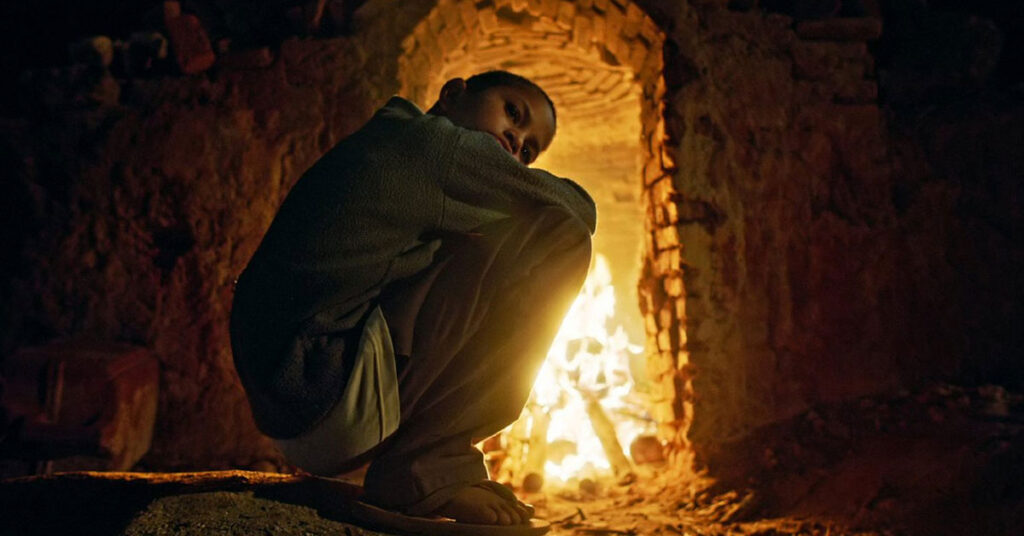
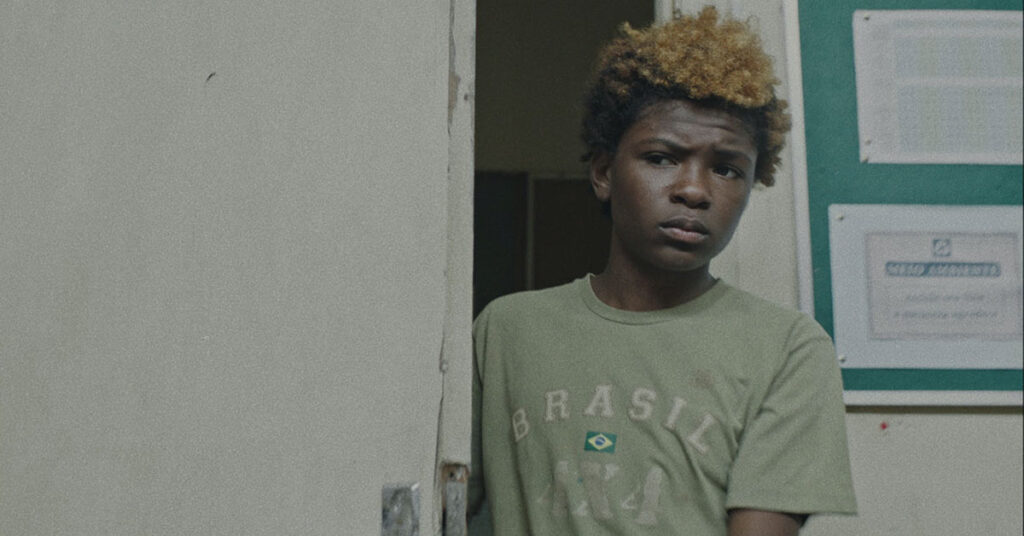
In the original short, titled “Three Kinds of Fear,” Bini builds a nonlinear narrative based on three distinct storylines that begin to intersect, telling the story of a drug dealer nicknamed Sapinho, who provided protection to the community of Jardim Novo Colorado, on the outskirts of Cuiabá. So much so that, despite the gravity of his crimes, a woman from the community collected money from other residents to hire a defense lawyer to get him out of prison. However, the lawyer receives a proposal from the police officer who arrested Sapinho and who also wants him released, but only to have another chance to kill him in revenge for the murder of his son. Bini tells exactly the same story in “Five Kinds of Fear,” adding two more narrative threads. Here the protagonist is Murilo, played by João Vitor Silva, whose mother recently passed away during the covid pandemic. While also hospitalized because of the virus, he meets nurse Marlene (Bella Campos), and the two begin a relationship. Still grieving, the young man sees a chance at happiness in the romance with the nurse, and cannot understand why she is reluctant to commit to the relationship. Everything becomes clear when he discovers that Marlene is the ex-girlfriend of Sapinho – here played by rapper Xamã – who still sees her as his “property.”
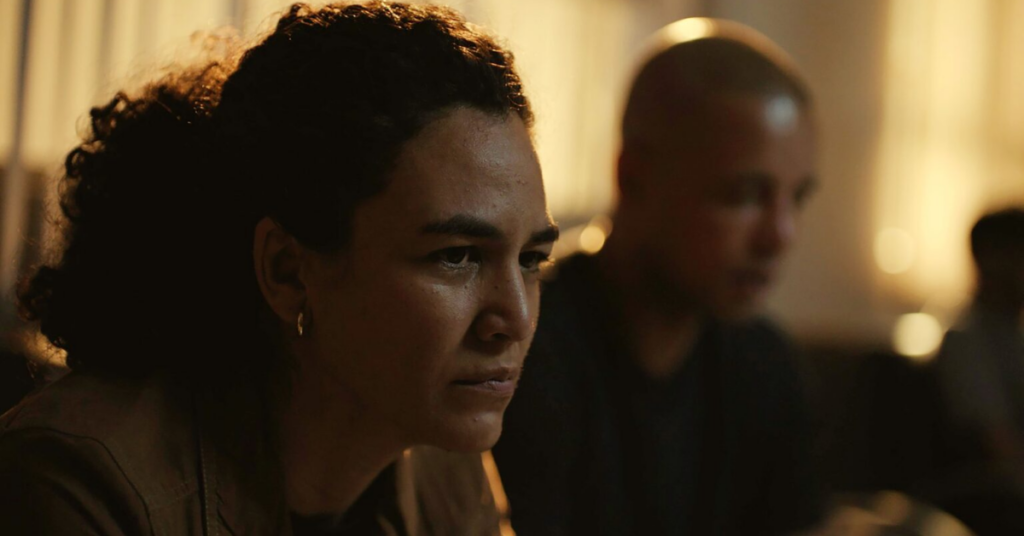
From there, the plot follows the same direction as the original short with Murilo as the main character, replacing the lawyer Ivan (Rui Ricardo Diaz). The screenplay still puts the lawyer in the same situation of receiving money from the residents of Novo Colorado to defend Sapinho. But while before he accepted the money out of the simple need to provide for his pregnant wife, now he is suffering from his wife’s death and his newborn daughter stuck in an incubator at the hospital, and his reasons for taking the job are only revealed much later in the story. In addition, Rejane Faria plays Antonia – the woman who brings the money to hire him – who is rewritten in the film as Marlene’s grandmother, creating yet another point of connection between the storylines. And finally, the vengeful police officer character from the short is reimagined here as Luciana, with Bárbara Colen embodying a far more complex and layered version of a cop suffering from the murder of her son and a failed marriage.
All these storylines intertwine in a narrative that moves back and forth in time to reveal what they have in common, drawing some comparisons to the cinema of Robert Altman and Alejandro González Iñárritu. But the fact that the film fits comfortably under the label of a crime drama with action sequences, while also featuring stylish editing and pop culture references, reveals a far more obvious parallel with Pulp Fiction. And even though drawing inspiration from Tarantino’s work has become a tedious cliché, Bini brings fresh energy to this style by investigating the theme of violence across multiple formats and environments without straying from a humanist perspective – crime, an abusive relationship, the emotional abandonment of a spouse, and deaths from covid as different faces of the same phenomenon. The characters’ violent acts are never gratuitous, nor does the film reduce them to shallow caricatures. And the strong work of the cast, with Bárbara Colen as the standout, only reinforces this.
The only ethical question would come from the real-life inspiration behind both “Five Kinds of Fear” and the original short film. There really was a drug dealer named Sapinho, respected by the residents of Novo Colorado, who felt protected by him and fought for his release, a fact that made the news in several newspapers in 2007. But the story of both of Bruno Bini’s films departs from that event and follows an entirely fictional path, which could spark discussions about the responsibility of a fiction film portraying a real story of violence. The figure of Sapinho is tragic, no matter from which angle he is examined, and the affection he received from his neighbors is a complex social phenomenon, to say the least. Even if the film surrenders to a genre format and is, at the end of the day, an entertainment product, is it capable of holding the weight of that reality? What is the responsibility in this case, not only of the author, but also of the audience? There lies another kind of fear.
Where to watch Five Kinds of Fear:

Credits
Screenplay: Bruno Bini
Production company: Plano B Filmes, Druzina Content
Co-production: Quanta
Cinematography: Ulisses Malta Jr.
Editing: Bruno Bini
Production design: Pedro von Tiesenhausen
Music: Leo Henkin
Sound design: Kiko Ferraz, Ricardo Costa
Distribution: Downtown Filmes