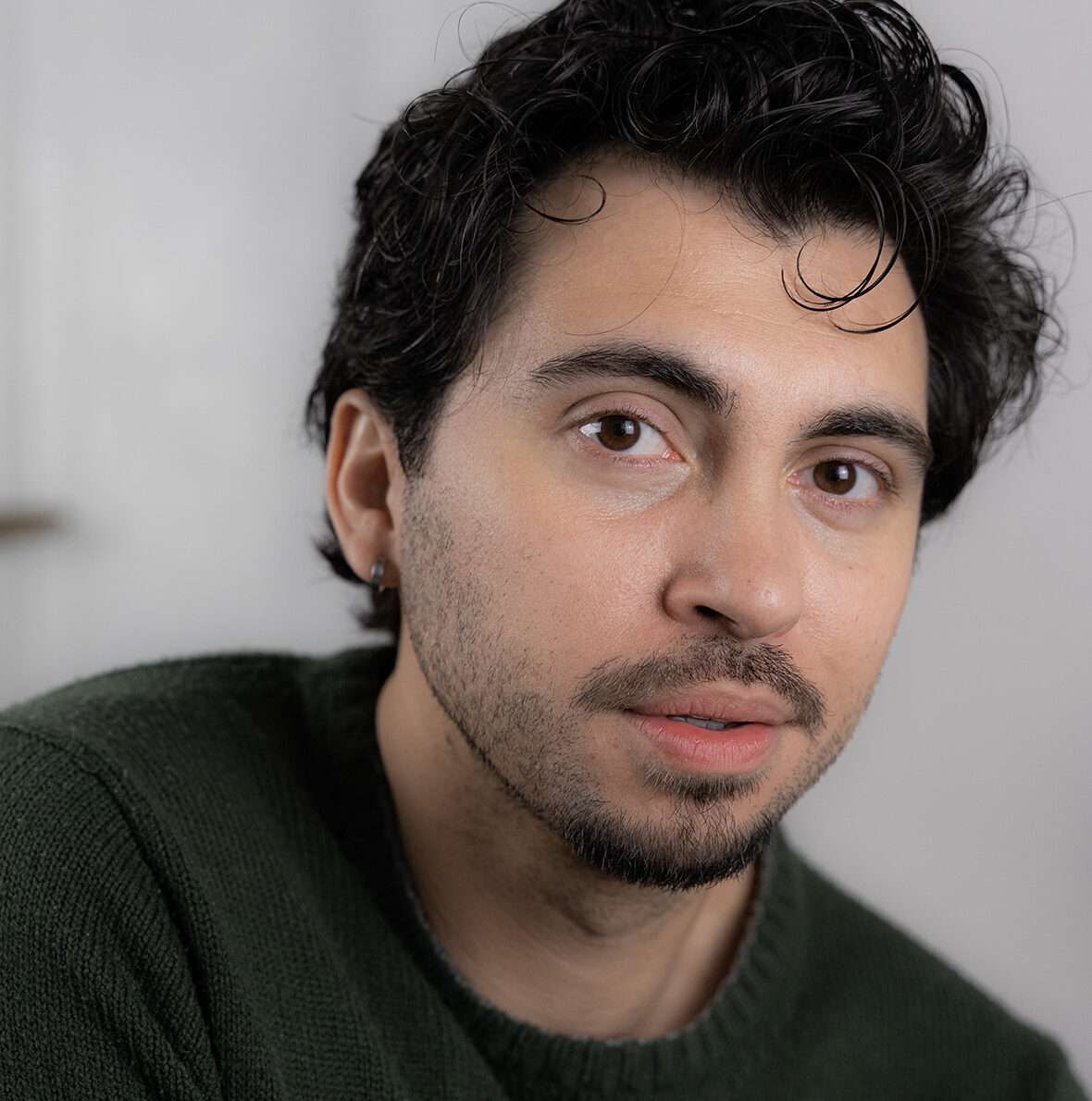
Tuca Siqueira calls BuenosAires a “landscape film”: a documentary that observes, rather than investigates, how a small town in the Pernambuco countryside collectively builds an identity borrowed from the Argentine capital. The feature was born in 2016, when the director (with over twenty years of experience across fiction and documentary, behind work like the series Chabadabadá, on Canal Brasil, the documentaries A Mesa Vermelha and Iracemas, and the fiction feature Amores de Chumbo) first came across the town through a photo book by Josivan Rodrigues.
Tuca spoke with Tropical Alien about the ten years of research and editing behind the film, and the line between reality and fiction that runs through it.
Synopsis: Buenos Aires is a small Brazilian town that shares its name with the Argentine capital. Its residents celebrate this coincidence by forming affectionate bonds with their namesake, expressed through football and culture during the last World Cup.
Over the ten years it took to develop the film, starting with that first contact with Josivan Rodrigues’ photo book, how did the documentary’s observational tone take shape? How did that approach solidify over time, including in the edit?
On my first trips to Buenos Aires, I went only to research and observe. Even with the camera off, that tone was already there, in that spirit of an observing researcher. I wanted to look at the town through its everyday life. From the start, I didn’t want to make a film centered on a single character; I wanted to build an ensemble narrative, even though I didn’t yet know how deep I’d go with each one.
In the edit, the film ended up becoming what I like to call a “landscape film.” But the observational character was there from the beginning. Many times I’d go to town just to research and wouldn’t film a single thing; other times I’d bring a camera and let things happen. That simple, everyday life of the town already captivated me.
Because it was made over ten years, the film took in images from different stages of research, shot on different formats and with different image qualities, including the last shoot we did during the World Cup. Since the town itself embraces imperfection, I felt very free to use any image I considered important.
Speaking strictly about documentary technique, there are moments where we work in direct cinema, with characters speaking straight to the camera, like Seu Souza, the gravedigger. But for the most part, the film keeps an observational tone. That language came directly from the desire to observe the town and the atmosphere of fabulation that, to me, was there from the very first time I visited.
The opening line “A vida é sonho” (“life is a dream”), from Waly Salomão, beautifully and poetically sums up several of the film’s themes. At what point in the process did that line come into the picture?
That line carried me through a lot during the pandemic. I spent that period in a small studio apartment in downtown Recife, where I could see the Capibaribe River from the window. I remember writing that line on the windowsill, because the way I read it, since 2016 we’ve lived through constant attempts to steal our dreams, especially our democratic ones.
The pandemic was a politically brutal time for Brazil. In the middle of all that, I and millions of other Brazilians were just trying to get through reality. For me, regardless of the circumstances, fabulation is a structuring element that helps us bear what’s real. That line gave me some kind of horizon.
Spending time in Buenos Aires during that period was also very inspiring, because it helped me reclaim a sense of dreaming. The people there were dreaming. Every character, at some point, talks about their dreams, or has their dreams introduced by the narrator. I was, and still am, researching this theme. My next film deals with it too.
So Waly Salomão’s line was essential for me. I deeply admire his work, and it brought to mind a documentary I consider brilliant, “Pan-Cinema Permanente,” by Carlos Nader. It’s a film that’s aesthetically very free, built from images shot over many years and in different formats. Even though the two films are quite different, I think they share that same search for aesthetic and poetic freedom.
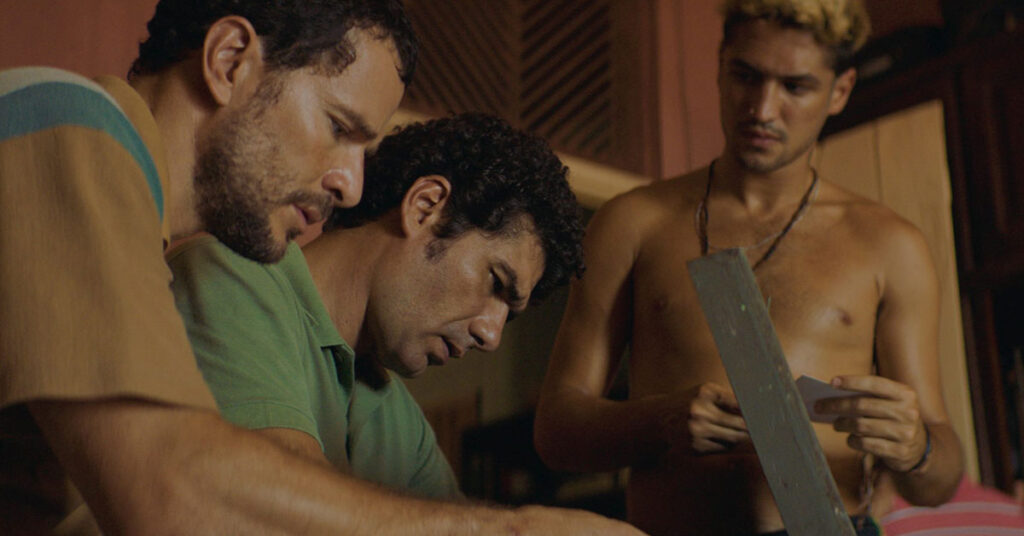
There are a few moments in the documentary, like the conversation between friends and the closing scene of the football player dreaming in his living room, that lean into fictionalization. How much of those moments was planned before shooting, and how much grew out of actually living alongside the characters? On set and in the edit, how do you negotiate the line between recording what exists and building what could exist?
The desire for those scenes existed even before the edit. In documentary, we go out to shoot with an outline script, partly because filming is expensive, especially in independent cinema. The closing scene was already planned for that final shoot, the one we did during the World Cup.
As it happened, Argentina made it to the final, and we decided to add one more shooting day to capture that moment in town. But the idea of using footage from Boca Juniors’ stadium had existed since the beginning, because I had filmed it myself during research. José Paulo talked a lot about his dream of visiting that place, so we realized it would be interesting to build that scene around it. Even the lighting deliberately uses Boca’s colors, blue and yellow. Everything there is very intentional.
As for the line between recording what exists and building what could exist, I think all my work flirts with dreaming. I like bringing images tied to subjectivity into documentary. That’s been a concern of mine since my first film, made in 2003. I’d follow characters through their everyday lives, but I’d also create moments that represented their desires, dreams, and fantasies.
That dialogue between fiction and reality interests me a great deal, because I believe it enriches the film. For me, that line is built through a relationship of trust with the characters. Staying connected to Buenos Aires over so many years created very strong bonds, and that made the whole process feel quite natural.
In fiction, I’m a director who loves working with actors, and I study a lot of casting and actor preparation. In a way, I carry that knowledge over into documentary as well.
What was the process of researching the residents of Buenos Aires and selecting who would be in the film? How many people went through that process before you settled on who would stay, and what criteria guided that choice?
Actually, there was never a situation where important characters got left out. What happened was the opposite: new characters kept showing up throughout the process, especially during the last shoot.
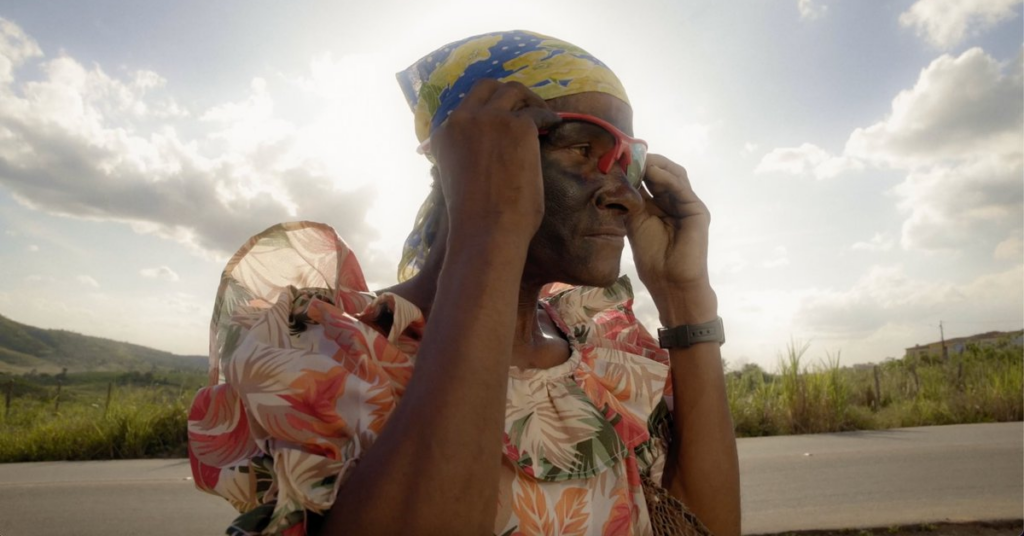
For example, the Colombian woman who appears in the film wasn’t planned at all in the beginning. I met her on the street and found out she ran a popular betting game she called “two for five hundred.” I found that interesting, and she ended up in the film.
The same thing happened with the two women who cook the empanadas. That scene already existed in the film’s imagination, but I hadn’t yet found the right people to bring it to life. They came along naturally during the shoot.
The research was very organic, because Buenos Aires is a small town. Everything started at José Paulo’s shop, the founder of the local Boca Juniors club. From him, I started meeting other people, discovering stories, and making connections. There was sometimes some initial resistance, but little by little, people came around to taking part.
For me, there was only one non-negotiable criterion: that the experience be fun for them. And I believe that happened. We recently held a screening right there in town, and the response was moving. People were thrilled to see themselves on screen.
This is a film built collectively. It doesn’t belong only to me or the crew. The residents feel like the film is theirs too, and I believe that’s true.
The world is made of imaginary lines, and it’s fascinating to watch their impact on questions of identity and belonging. Buenos Aires, Pernambuco, is a radical example of that: a collective creation that doesn’t need any precise historical grounding to work. Now that the film is finished, how do you read the way residents are behaving? And how did you carry the political dimension of the right to dream into the lightness the film adopts as its stance?
This film is a great act of sharing. I was claiming my own right to dream, and spending time in that town was a way of feeding that. Buenos Aires inspired me because I’d find people there dreaming and acting on their desires as best they could, without much judgment.
I like to joke that I’d love to print out a picture of the Maradona statue and hang it in my office. It’s not perfect, but it got made. It’s there. And to me, the town was always saying something like: “Go and do it. Don’t give up.”
There were plenty of reasons to give up on this film. Not just this one, but so many other projects made in Brazil over the last few years. Brazilian cinema, like key parts of society, went through a very hard stretch. But Buenos Aires kept reminding me how important it was to keep going.
I think I make films to share that experience, and to remind people that we shouldn’t give up our right to dream. It’s a theme I keep researching, and one that’s also present in my next project.
A lot of people say that Buenos Aires, Pernambuco, wants to be the Buenos Aires in Argentina. The film shows some attempts in that direction, some of them even failed ones. But deep down, I don’t think the town actually wants to become something else. It borrows a few symbols, a few allegories, and creates something of its own.
To me, Buenos Aires is almost a “non-place”: a space of intersection where you can access desires for freedom, dreams of freedom, and pure processes of creation and fabulation. That’s exactly what inspires me, and what led me to make this film.
What Brazilian films would you recommend to Tropical Alien’s readers?
Following up on “BuenosAires” and our conversation about Waly Salomão, I’d strongly recommend “Pan-Cinema Permanente,” by Carlos Nader. It’s a gorgeous film, very free in its form.
I’d also recommend “A Fabulosa Máquina do Tempo,” by Eliza Capai, an extraordinary documentary that’s still making its way through festivals.
And I’d like to recommend “Nós que Aqui Estamos por Vós Esperamos,” by Marcelo Masagão, a documentary that’s already a classic, and one that’s still incredibly moving.
Those are the three recommendations I’d like to leave for Tropical Alien’s readers.
Where to watch BuenosAires:

Credits
Direction and Screenplay: Tuca Siqueira
Production: Rayssa Costa, Tuca Siqueira
Production Company: Garimpo Filmes
Distribution: Arthouse Distribuidora
Cinematography: Roberto Iuri, Felipe Lima
Editing: Marcelo Coutinho, Tainá Menezes
Original Score: Henrique Albino
Sound Editing: Guga S. Rocha, Bruno Alves
Cast: Vitória, Zé Paulo, Leonardo, Josi, Barachinha, Neném Modesto, Biarte, Marcelo
Format: Documentary
Country: Brazil
Year: 2026
Runtime: 70 minutes