Why we recommend it
Review
“…that everything would pass quickly, the way everything passes in São Paulo.”
These words, delivered in Walmor Chagas’s somber narration, crystallize the central theme of São Paulo, S.A., the masterpiece of celebrated filmmaker Luiz Sérgio Person. They draw a parallel between the expansion and mechanization of São Paulo from the 1950s onward and the transitory existence of its inhabitants — lives shaped by an almost religious belief in “progress,” yet whose human connections dissolve in the speed at which the world moves. Released in 1965, São Paulo, S.A. remains relevant, among its many other virtues, for posing this question: whether a city or a person, how can something grow so much and still become less of itself?
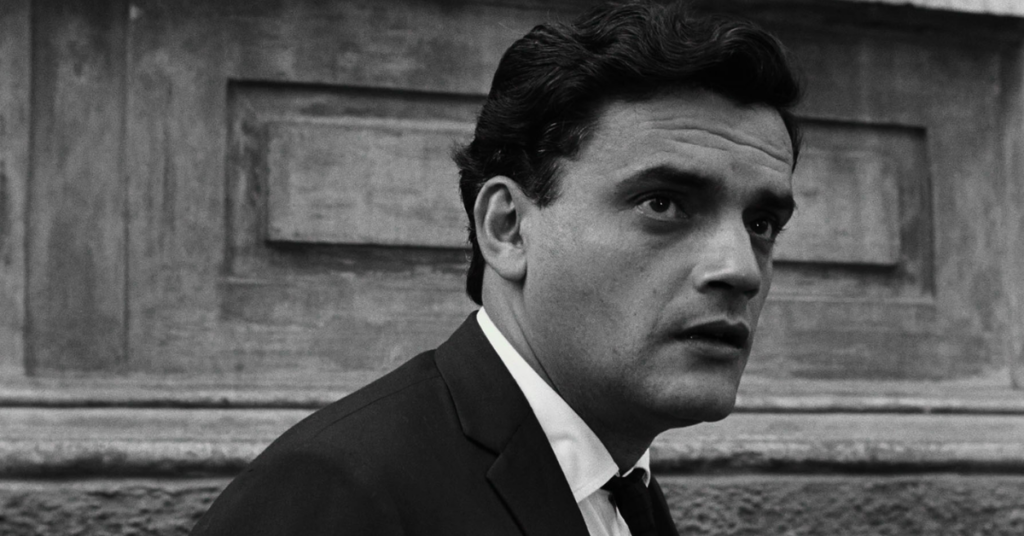
Walmor Chagas plays Carlos, a middle-class man with apparently no family and no past, trying to get ahead in the sprawling, overpowering landscape of São Paulo after the industrial explosion of the 1950s. The film unfolds over a span of a few years, weaving through Carlos’s various and toxic relationships as he pursues his ambitions. Four people in particular become the cardinal points of his life, each representing a different facet of existence in the city. Ana, played by Darlene Glória, lives a hedonistic, detached life — a portrait of the party-going youth that treated the big city as an amusement park. Ana Esmeralda plays Hilda as an archetype of the new intellectual, someone who likes to hold forth on everything with great authority, who was drawn to São Paulo as a cultural hub and beacon of the future, only to be crushed by what the future revealed. And Luciana, in an astonishing performance by Eva Wilma, is the quintessential homegrown girl who grew up in the city and watched it grow around her. Of all of them, she is the most like Carlos, which is precisely why their relationship is the most volatile. But the most significant relationship in Carlos’s life is with his friend Arturo, played by Otelo Zeloni. Cheerful and amoral, Arturo is a stereotype of the rising capitalist who bet on the automobile industry and helped construct São Paulo’s image as the engine of the country. The son of Italian immigrants who built his wealth through the exploitation of his workers — a clear nod to the history of the Matarazzo family — he was Brazilian, but saw himself as an outsider. It is the friendship with Arturo that sets the course Carlos will follow. “Friendship,” though, may not be the right word. These are two men who tolerate each other while exploiting one another. Carlos envies Arturo, draws inspiration from him, and at the same time resents everything he is.
The film’s choice to tell the moments of Carlos’s life out of chronological order, combined with a narration that surfaces his inner monologue, builds the portrait of a man lost in his own memories as he tries to make sense of that period of his life. The opening scene places Carlos at the exact moment toward which the entire story will build: a final argument with Luciana. The scene is observed from outside his apartment window, where nothing being said can be heard, and the figures of the two are framed by the distorted reflection of the city’s buildings in the glass.
This unsettling vantage point casts the viewer as an intruder, trailing Carlos through the landscapes of São Paulo. It is a role reinforced by the opening credits sequence, which shows a crowd pouring out of trains at the Luz station, and by other scenes shot on location throughout the city, all of them teeming with people. It was inevitable, especially in the 1960s, that a film camera in the middle of an urban landscape would draw the attention of passersby — and so people looked into the lens. Whether Person intended for the viewer to feel watched in return, and thus drawn into the film, cannot be said with certainty, but that is precisely the effect. The intricate and layered cinematic language the director employs is certainly capable of carrying that kind of visual metaphor, and the film is full of other images that press up against meaning — the light going out over the dinner table where Carlos’s and Arturo’s families have gathered, or the silent judgment in the gaze of Ana’s deranged mother watching her daughter.
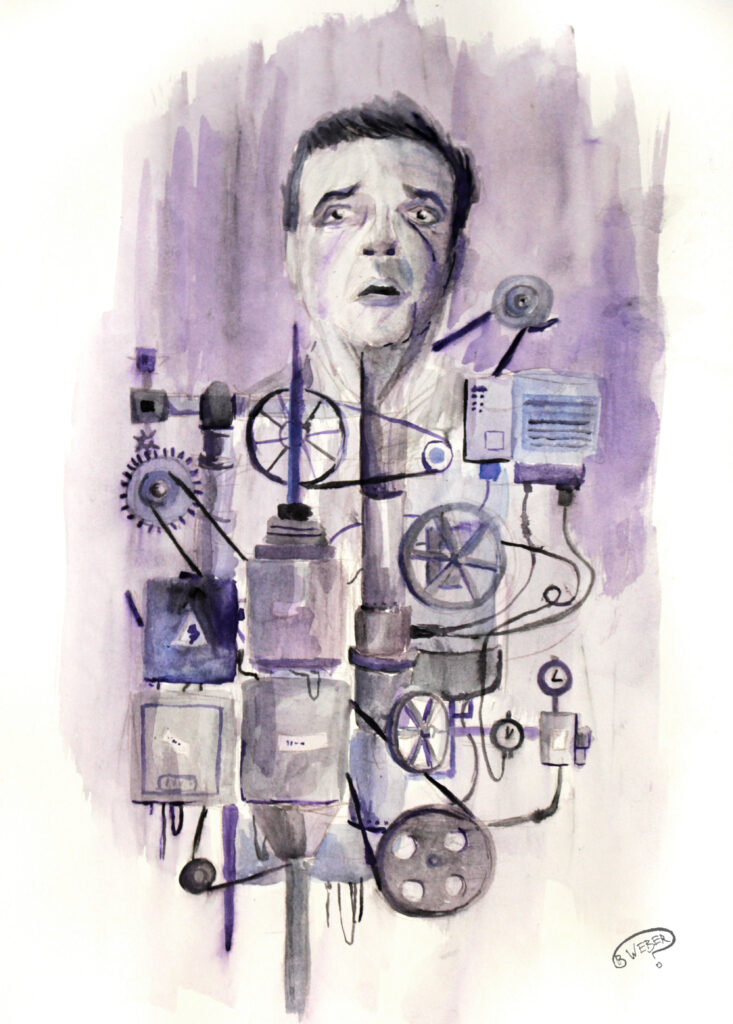
Person uses all of these elements to draw a parallel between Carlos’s growing disconnection from his own humanity and the progressive mechanization of São Paulo and the lives of its inhabitants. Carlos becomes someone defined solely by ambition, not by any actual goals. He wants so much, but he doesn’t want to be anything — not a boss, not a husband, not a father. He desires constantly, but doesn’t want to own anything. Hilda, Ana, and Luciana were merely stops along a journey that had no destination, women caught in the machinery of an ego that grew hungrier and crueler with time, and that had been devouring even itself from the very beginning. By the film’s end, Carlos understands that São Paulo is an inescapable purgatory. A vast, clamorous corporation in which all of us — the street preachers, the beggars, the intellectual artists, the executives in their ties — are just employees.
Where to watch São Paulo, S.A.:

Credits
Genre: Drama
Runtime: 111 min
Director: Luiz Sérgio Person
Assistant Director: Pedro Carlos Rovai
Screenplay, Story and Dialogues: Luiz Sérgio Person
Cast: Walmor Chagas, Darlene Glória, Eva Wilma, Otelo Zeloni, Ana Esmeralda
Production: Renato Magalhães Gouvêa
Executive Production: Nelson Mattos Penteado
Production Assistants: Ramirez Orlando, Miguel A. Martin
Production Companies: Socine Produções Cinematográficas; Lauper Films
Distribution: Columbia Pictures of Brasil Inc.
Cinematography: Ricardo Aronovich
Camera Assistants: Hugo Kusnetzoff, João de Almeida
Animation: Ede Aguiar
Sound Director: Juarez Dagoberto da Costa
Location Sound: Carlos Foscolo, Waldir Bonnas
Editing: Glauco Mirko Laurelli
Assistant Editor: Roberto Milani
Sound Editing: Glauco Mirko Laurelli
Production Design: Jean Laffront
Costume Design: Confecções Tomaso
Makeup: José de Almeida
Music: Cláudio Petraglia, Francisco Alves, David Nasser
Original Score: Cláudio Petraglia