Why we recommend it
Review
Humanity, in every sense of the word, has always been the main focus of Valter Hugo Mãe’s work. In his books, the prolific Portuguese writer has always delved into the core of the human being, beneath conventions and traditions, trying to find the hidden truths of mankind, searching for a reason to keep believing in something like hope. In this sense, “The Son of a Thousand Men” may be his most ambitious work. This same sentiment carries through in the recent Netflix adaptation of the book, directed by Daniel Rezende.
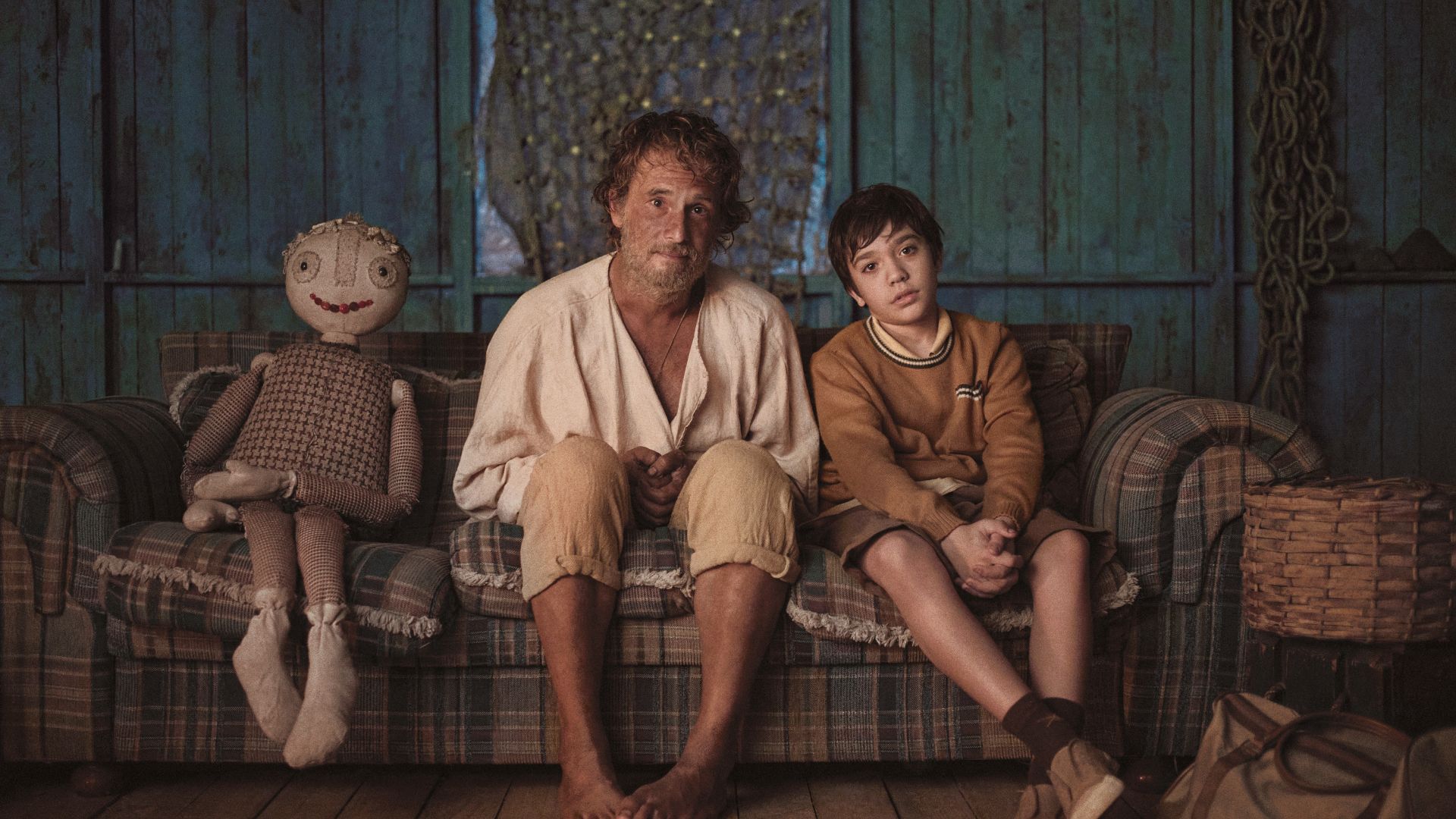
The film opens by introducing us to Crisóstomo (Rodrigo Santoro), a solitary fisherman who lives in a shack by the sea. Treated as an outcast by everyone around him, he keeps his distance. Living as a hermit, though not exactly resentful of it. Still, he suffers. Expressing his pain not through words, but through occasional screams he directs at the ocean. The reason for his suffering is reaching forty and discovering how much he misses having a son, which he tries to compensate for by showing affection to a rag doll he carries around.
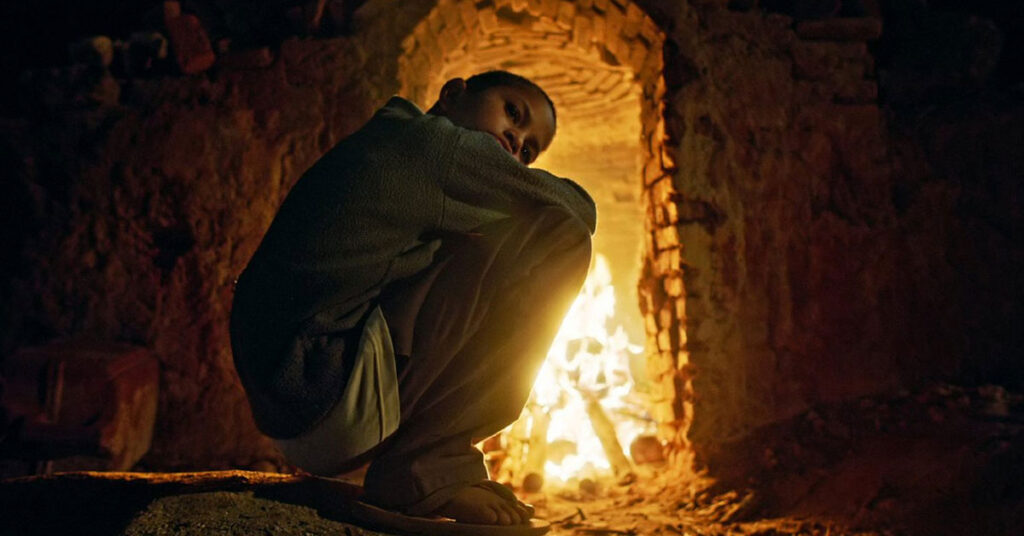
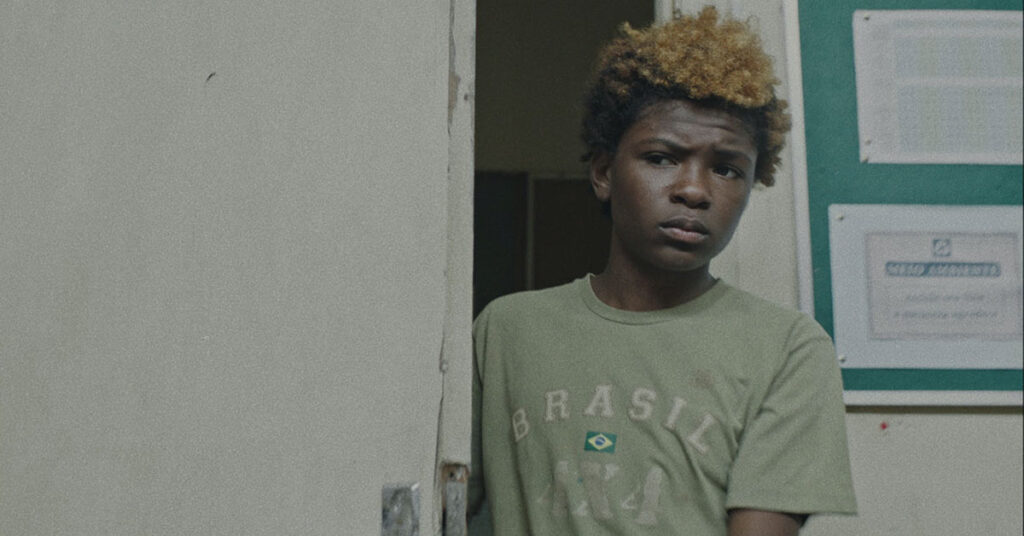
However, even though Crisóstomo is the actual protagonist, the plot of “The Son of a Thousand Men” lies in the intersections of the various characters’ stories who inhabit the same small coastal town where he lives. Thus, when the film chooses to move away from Crisóstomo through the various chapters it’s divided into, we also get to know the orphan boy Camilo (Miguel Martines, incredible in his first role), who longs to rebuild a family structure where he can fit in after the death of his adoptive grandfather Alfredo (Marcello Escorel).
And also Francisca (Juliana Caldas), who draws the neighborhood’s attention as they try to reduce her to the role of victim simply because she has dwarfism, while most of the village prefers to ignore her. Antonino (Johnny Massaro) is a prisoner of a society that doesn’t accept his sexuality, and his imprisonment becomes literal through the dominating figure of his mother, Matilde (Inez Viana). And finally, Isaura (Rebeca Jamir), who closes herself off from the world after suffering sexual abuse in her youth. The trajectories of all these characters intersect, bringing revelations about that village’s past and about these people’s possible future.
Daniel Rezende may have done the best work of his career adapting the original text to the screen, even taking the most obvious path by using narration to follow the lives of so many characters who are defined by their silence. In this way, it’s actor Zezé Motta’s voice that reveals the plot’s deeper meanings, reciting various passages from the book directly while giving the film a fable-like quality.
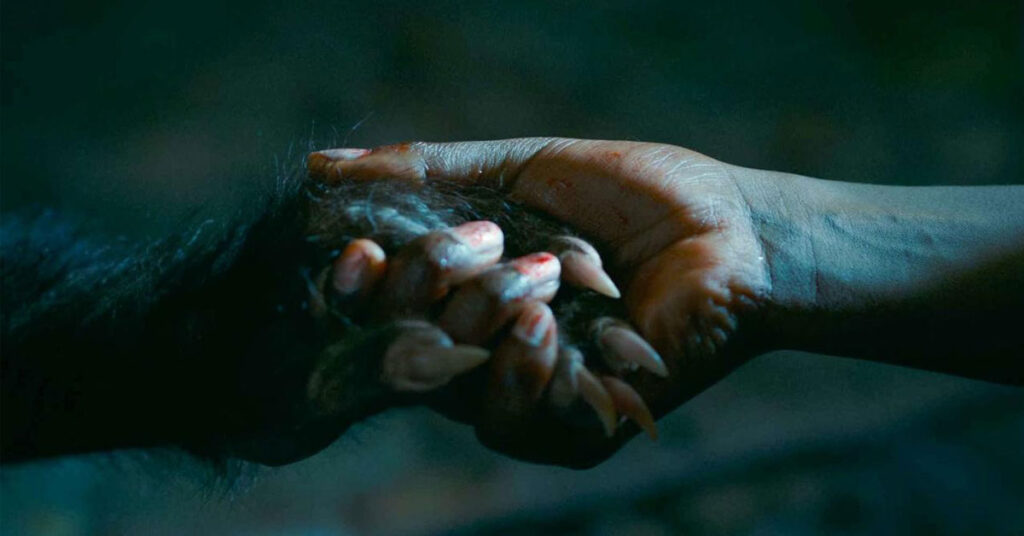
This brings an enchanting visual quality to the production, reinforced by the choice of other language elements. Especially through the elegant time transitions, in which the actors playing the characters in their younger versions are replaced on screen through a door being closed and opened, or through a camera movement pulling away and then returning to them. This approach also reinforces the film’s magical realism elements, like Crisóstomo’s mystical relationship with the sea, which is never really explained (not that it needed to be), or the French accent that affects Isaura’s mother like a disease. Another example of this is the uncertainty of the village’s identity, which has characteristics of various coastal communities, as if it united the Portuguese origins of the original text with the production’s Brazilian identity.
So many characters and so many elements recombining in that quiet and humble setting make “The Son of a Thousand Men” a kind of “humble epic.” A story full of meanings and twists, with bursts of feelings and striking images, but that maintains a certain placidity. The beauty of the place and the poetry of the images contrast well with the inherent discomfort of the themes discussed by the film.
It doesn’t take long to understand that the people of that place are trapped in a cycle of small and large violences. And among the dilemmas faced by the main characters, what they have most in common is the moment when they need to choose whether to conform or confront that nefarious logic. Every element that helps make that setting believable shows how the ignorance, homophobia, and sexism that plague every house and street of that village transform into folklore, a story of barbarities they tell each other under the guise of virtue.
The only one who seems somewhat free from this is Crisóstomo, although the film reveals that at some point he was also a victim of that violence. But by distancing himself from everyone and choosing to live as a hermit, he managed to maintain a compassion for others and for himself that may even seem naive, but is painfully necessary. Isaura, Antonino, and Camilo, upon coming into contact with Crisóstomo, discover that there is power in forgiveness and courage in simply leaving.
The final message of “The Son of a Thousand Men” is revealed in the film’s final moments with the secret meaning of its title: loving yourself despite others’ gazes and loving others as they are is the only way to survive in this world.
Where to watch The Son of a Thousand Men:

Credits
Screenplay: Daniel Rezende (adaptation of the book The Son of a Thousand Men, by Valter Hugo Mãe)
Production Companies: Biônica Filmes, Barry Company
Distribution: O2 Play
Production: Karen Castanho, Juliana Funaro, Bianca Villar, Fernando Fraiha, Krysse Melo, René Sampaio
Executive Production: Bianca Villar, Daniel Rezende, Juliana Funaro, Karen Castanho, Rodrigo Santoro
Associate Production: João Macedo
Cast: Rodrigo Santoro, Rebeca Jamir, Johnny Massaro, Miguel Martines, Juliana Caldas, Grace Passô, Inez Vianna, Lívia Silva, Antonio Haddad
Casting: Luciano Baldan
Cinematography: Azul Serra
Production Design: Taísa Malouf
Costume Design: Manuela Mello
Makeup: Martín Macías Trujillo
Editing: Marcelo Junqueira
Post-Production Supervision: Bruno Horowicz Rezende
Visual Effects Supervision: Juliano Storchi
Original Score: Fábio Goes
Sound Editing: Toco Cerqueira
Sound Mixing: Toco Cerqueira
Format: Feature Film / Fiction
Year: 2025
Country: Brazil
Language: Portuguese