Why we recommend it
Review
Published in 1977, “The Hour of the Star” may be the most celebrated character study in Brazilian culture. Clarice Lispector’s novel earns that distinction — even measured against other acclaimed works of our literature — for the remarkable feat of delving into a protagonist of exemplary mediocrity and singular vulgarity. The young Macabéa is painfully plain and unremarkable, a poor and ignorant girl whose face dissolves into the ocean of faces drifting through Brazil’s great cities. Lispector’s novel excavates her existence, detailing in relatively few pages the elements that make up this person. In that sense, the film of the same name directed by Suzana Amaral can also be considered one of cinema’s great character studies — and one of the most perfect adaptations of a printed word to screen.
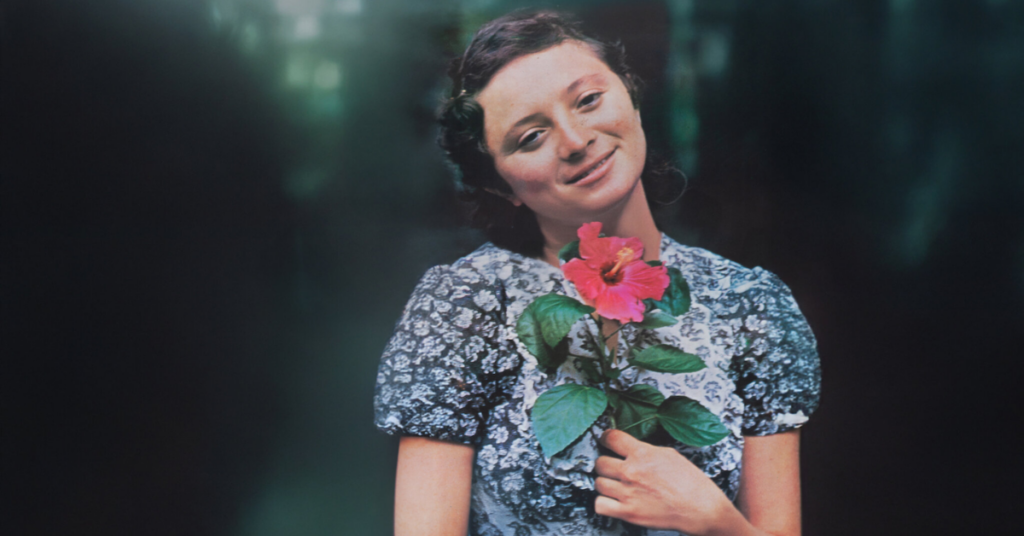
“Perfect” in the sense of faithfully transposing the themes and singular approach of Lispector’s writing, because the director does not shy away from making changes to the story. The focus remains the sad and mediocre life of Macabéa (here played by Marcélia Cartaxo), a young woman from the Northeast who came to the big cities of the Southeast in search of a better life, like so many before and after her. She divides her time between her job as a typist and listening to the radio at the boarding house where she lives. Work is difficult for Macabéa — she types slowly, makes grammatical errors, and struggles to maintain basic hygiene, so her employers tolerate her only until her probation period ends. As for the radio, the hours she spends with her ear pressed to the set offer her no intellectual nourishment. She enjoys repeating the random facts rattled off between songs on her favorite station, though she doesn’t quite understand what they mean. Some songs, however, make her cry. On Sundays she rides the subway, because she finds it beautiful — she’s also very fond of screws and bolts. And that’s it. That is Macabéa’s life. A solitary one. She lost her parents early, and the aunt who raised her without much warmth died before she decided to leave the Northeast. She has no friends either — at most, acquaintances. Like the girls who share her room at the boarding house, who find her strange. Or Glória (Tamara Taxman), the coworker who treats her with that falsely warm, condescending tone that everyone has encountered from someone at some point in their lives. Unable to match Glória’s success with men, Macabéa exists in a perpetual state of romantic frustration and repressed sexual desire. She sees a chance to change that when she meets Olímpico (José Dumont), also a Northeastern migrant, with a rough-edged charm that enchants her. But true hope only arrives for Macabéa in the form of Madame Carlota (in a wonderful cameo by Fernanda Montenegro), a fortune teller who opens the poor girl’s mind to her final moment of happiness.
None of these elements from the source material are lost in Amaral’s adaptation, which she co-wrote with Alfredo Oroz. She does, however, relocate the story from Rio de Janeiro to São Paulo, her hometown — a familiarity that serves the film well. The images drift through the landscapes of 1980s São Paulo, mirroring Macabéa’s own dazed wandering. Barra Funda, Parque da Independência, the surroundings of Sé station and Praça da República are all captured through Amaral’s lens with a mixture of wonder and estrangement — the gaze of every newcomer arriving in one of these vast urban centers. The sharp direction and strong performances from the entire cast don’t conceal the production’s low budget, but that’s not a problem: the dubbed dialogue (a necessity given the lack of direct sound recording) and a somewhat dated, occasionally grating score end up adding to the film’s charm. A product of its time, without a doubt.
The greatest achievement of “The Hour of the Star” is Marcélia Cartaxo’s performance and physical embodiment of Macabéa — a creation of the most thoroughly below-average person imaginable, someone who manages to be uninteresting in every conceivable way, yet still draws the viewer’s compassion. She is a tragic figure precisely because she cannot comprehend her own tragedy, haunted by the inadequacy that everyone around her can plainly see. For that reason, and because of a childlike quality that keeps her passive and imprisoned, she apologizes incessantly, without knowing what she is apologizing for. In a similar way, José Dumont’s portrayal of Olímpico functions almost as a mirror to Macabéa’s personality — expansive and volatile, carrying within him the dream of the restless migrant full of ambitions. And yet he still recognizes something of himself in her. Neither of them finds warmth or comfort in São Paulo. Both live with a fear that never goes away. Perhaps that is why Olímpico grows to resent Macabéa and pushes her away — he sees her as beneath him, yet is irritated by her curiosity and her questions. For all her shortcomings, Macabéa possesses a hidden depth that he is incapable of reaching, while Olímpico is simply shallow and empty.
All of these themes are presented with considerable directness, because another fundamental change the film makes from the book is the absence of the narrator figure. In the original novel, Lispector creates the character of Rodrigo S.M., who presents himself to the reader as the story’s true author, narrating as he writes. This device allows the text to burrow even deeper into Macabéa’s inner life, while drawing parallels throughout her story — uncovering poetic meanings and raising philosophical questions, despite centering on a seemingly ignorant and modest protagonist. By reading Lispector’s words with Rodrigo S.M. positioning himself as a character, we share in his fascination with Macabéa’s story and follow him through his reflections. A double bond forms between the reader and both the protagonist and her author. In the film, such a mechanism would be beside the point — image and sound create a more direct connection with the audience. Macabéa as embodied by Cartaxo carries in her face and her clumsy way of speaking all the meanings the original narrator labors to articulate. Amaral’s approach, more naturalistic than Lispector’s, would not have accommodated a narrator who suddenly keeps intruding in a rather artificial manner. At least, that’s how I see it.
Watching the film again now, something in Marcélia Cartaxo’s eyes felt familiar. Growing up in the interior of São Paulo, when I first started coming to the capital, I also thought the subway was the most beautiful thing in the world. When I eventually moved here for good, that feeling lasted a little while longer. But it passed. A lot has passed since we were young and lost like Macabéa. Now we are only lost. Or we are nothing at all.
Don’t forget that for now it is strawberry season.
Yes.
Trailer
Where to watch The Hour of the Star:

Credits
Screenplay: Suzana Amaral and Alfredo Oroz, based on the novel by Clarice Lispector
Production: Assunção Hernandes, Suzana Amaral, Plínio Costa, Nadya Abreu Amaral, Marco A. Rezende, Esther Soares
Production Companies: Raiz Produções, Embrafilme
Cinematography: Edgar Moura
Editing: Idê Lacreta
Production Design and Costume Design: Clovis Bueno
Original Score: Marcus Vinicius
Sound: Tide Borges, José Luiz Sasso
Makeup: Maria Antonia Lombardi
Assistant Director: Sylvia Bahiense
Cast: Marcélia Cartaxo, José Dumont, Tamara Taxman, Fernanda Montenegro, Umberto Magnani, Denoy de Oliveira, Lizette Negreiros, Sônia Guedes, Carlos Cambraia, Cleide Queiroz, Ednaldo Freire, Elza Gonçalves, Magali Biff, Maria do Carmo Soares, Marli Bortoletto, Nilton Borges, Dirce Militello, Rubens Rollo, Roney Facchini, Walter Paulo Filho, Euricio Martins, Miro Martinez, Manoel Luiz Aranha, Ursula Grozca Marcondes