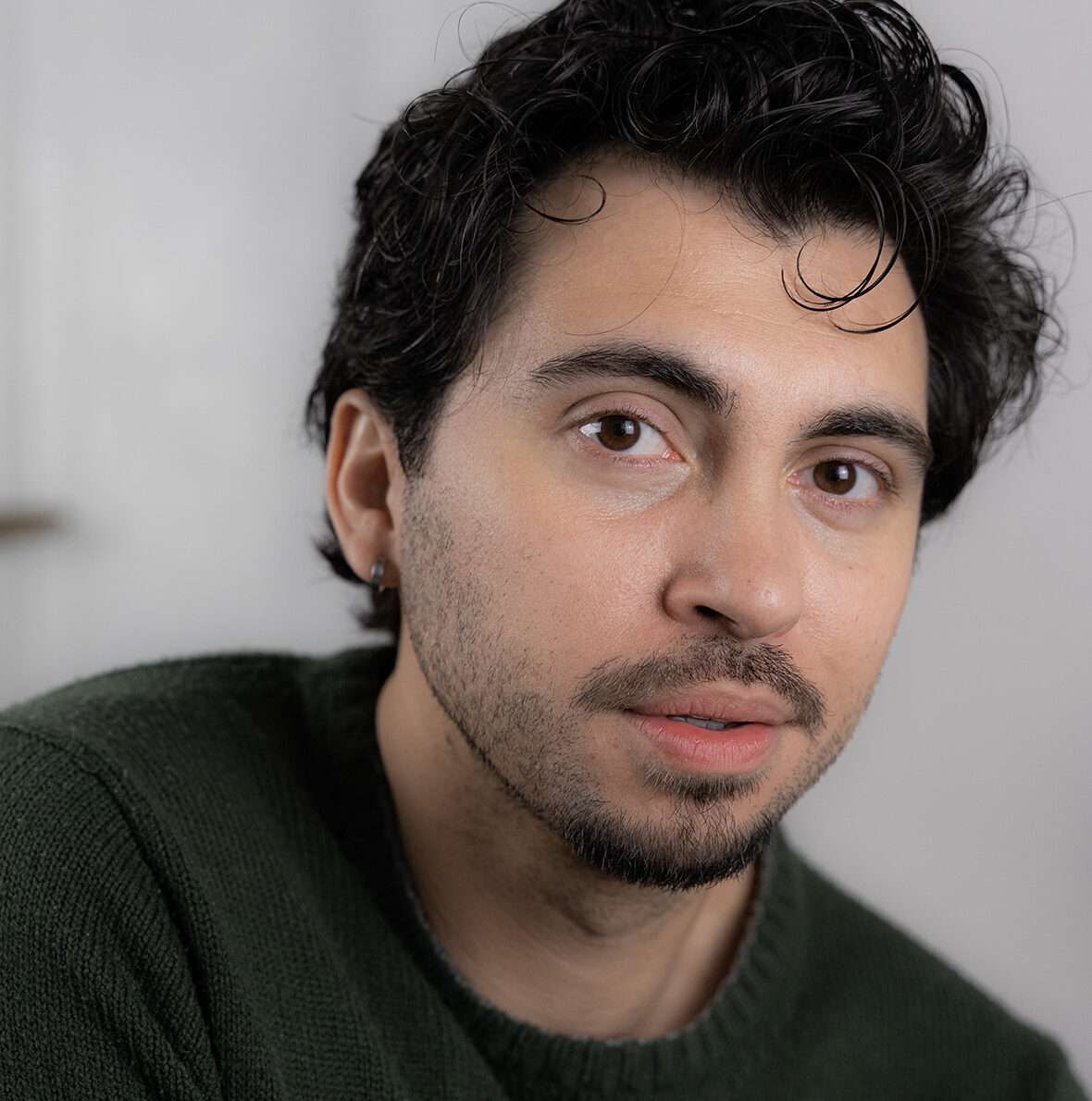
In this interview for Tropical Alien, Leonardo Feliciano shares the behind-the-scenes of “Araby’s” cinematography, revealing how he built the film’s visual language over three years of discontinuous shooting, balancing naturalism and detachment to tell Cristiano’s story.
Leonardo Feliciano is the cinematographer behind contemporary classics of Brazilian cinema such as “White Out, Black In” by Adirley Queirós and “Mars One” by Gabriel Martins. He’s also the winner of best cinematography awards at the ABC Prize 2023 and Grande Prêmio do Cinema Brasileiro 2023 (both for “Mars One”), and was recognized at the Brasília Festival and by the ADF (Argentine Cinematographers Association) for “Araby”.
Synopsis: Upon finding a worker’s diary in an industrial village in Ouro Preto, young André comes into contact with the moving life trajectory of Cristiano, amidst the social and political changes in Brazil over the past ten years.
How did the project reach you and why did you choose to be part of it?
My first contact with the project was at the Tiradentes festival in 2014, where “White Out, Black In,” a film by Adirley Queirós that I had shot, premiered. A month earlier, in December 2013, I met Affonso in São Paulo through some mutual friends. I was in the city finishing precisely “White Out, Black In,” and Affonso was finishing “Neighboring Sounds.” We met a few times and he mentioned the project at least once.
After the premiere of “White Out, Black In” in Tiradentes, the mention became an invitation, from him and João Dumans, whom I met during the Festival sessions.
How was the creative relationship with João Dumans and Affonso Uchôa? What were the initial conversations about the film’s visual language – concepts, references, sensations you wanted to evoke?
“Araby” was a film that transformed a lot during filming, for different reasons. In this beginning, in 2014, I was very interested in the natural light of Ouro Preto (a city I didn’t know until then), especially the natural light in houses and other interiors. I couldn’t identify exactly why. Perhaps the predominance of shuttered windows, with not so common use of curtains – it wasn’t rare to find light entering and drawing the exterior, in a very subtle camera obscura effect. I remembered a photographic series by Todd Hido, who works with these large “pinholes” in empty houses, and I started my research there.
Another thing that caught my attention in Ouro Preto was the great contrast of the night exteriors, which made me start incorporating the idea of not diffusing the light, being more punctual, working with harder sources (always a great challenge for cinematographers).
As I said, “Araby” was a film of constant transformations, with a strong processual character. So beyond these paths, I wanted to bring more personal things, which would remain regardless of eventual changes, like working with diegetic lights.
João and Affonso were always very open to ideas, particularly to practical sources, because besides being a good resource for building depth and contrast, it also speeds up the set and gives the Director more time to work with the actors.
Both the camera and the lenses were mine, which allowed us to think about visual writing almost from scratch, with tests and scenes that never made it to the final cut, but which were fundamental for the film to mature.
Did you have specific cinematographic references in mind when conceiving the cinematography for “Araby”?
Honestly, no. I always try to enter the method and practices of the directors I work with, so the cinematography had to assume this processual character as well.
The film was shot over three years in discontinuous periods (5 days in 2014, 6 weeks in 2015, and 1 additional week in 2016). How did this discontinuity influence your technical choices? What tools – camera, lenses, lighting approach – allowed you to maintain visual consistency through this fragmented process?
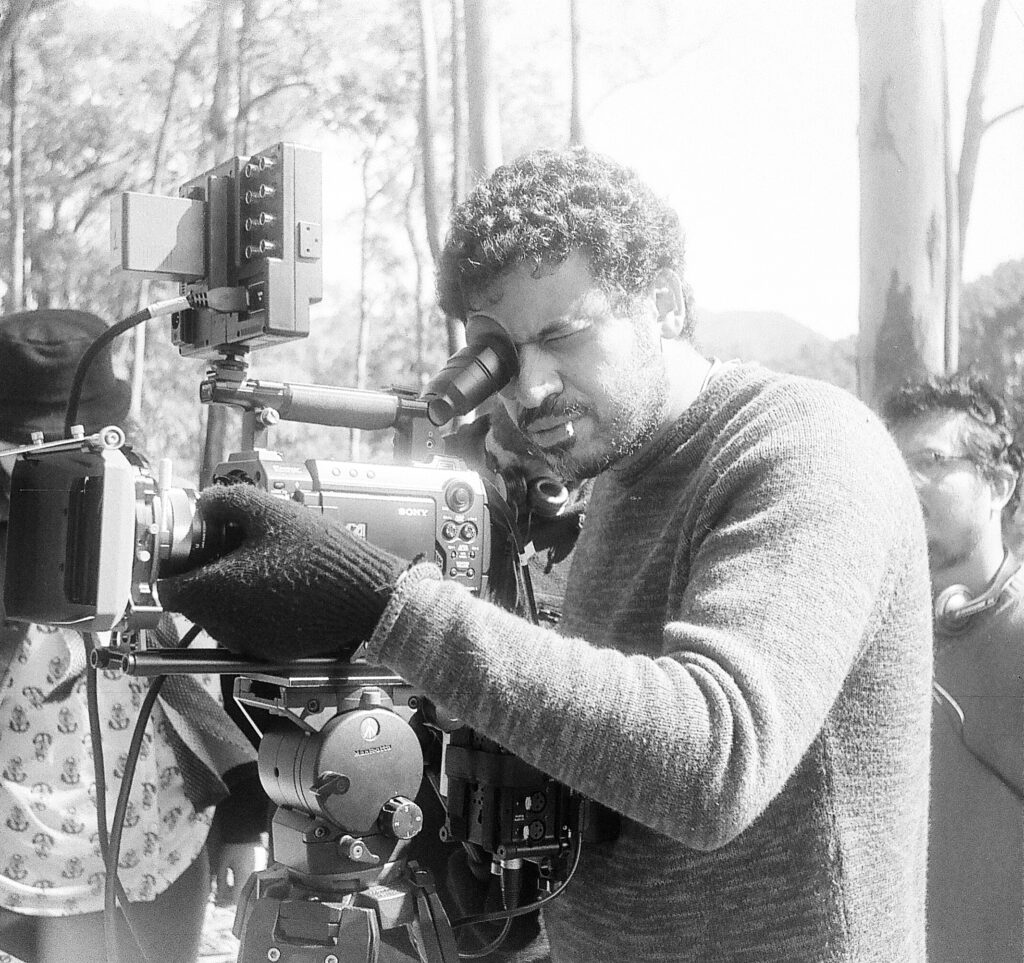
As I mentioned, the camera (a Sony F3), and the lenses (set of Zeiss ZF, with different minimum apertures, but always transitioning between f/1.4 and f/2.0), were mine. It was equipment I had just used on “White Out, Black In,” and I was interested in using it again at that moment, both for Sony’s logarithmic Gamma, and for the relative “brightness” of the system (which would help me in low light situations). We had support in lighting equipment from a prize for “Neighboring Sounds,” if I’m not mistaken. It was good support, which allowed me to get new and medium-sized equipment, HMIs from Arri’s M series.
So we went to the set with a set of equipment that didn’t follow a traditional rental logic, allowing me to maintain the same method in the different filming stages. This was fundamental, but it was “just” the technical part.
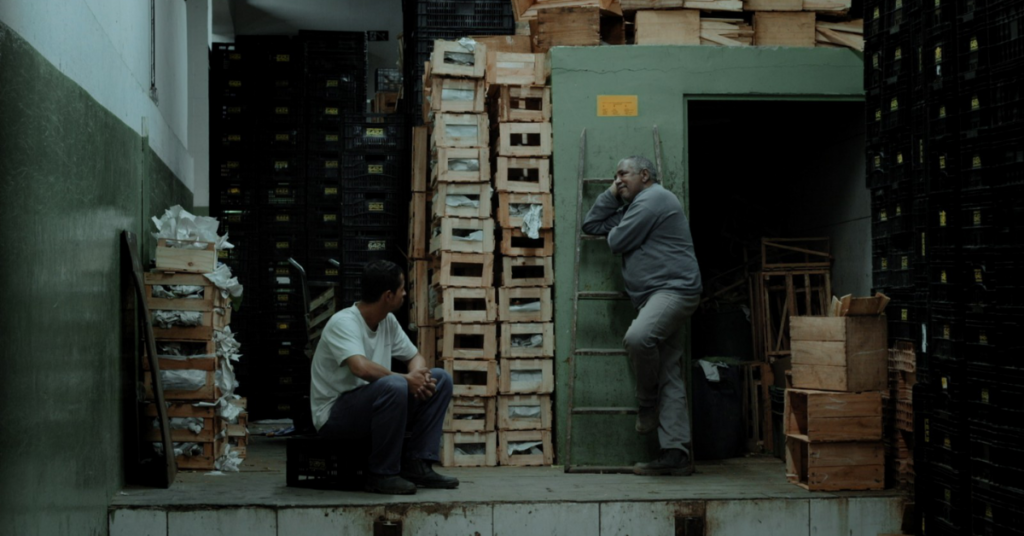
As the film unfolded, and Juninho (character Cristiano) returned to the film days before the 2015 filming began, I realized that some ideas would be left aside, and I needed to understand what the equipment (especially lighting) could offer me. Juninho’s return to the film made João and Affonso rewrite many scenes, and this usually happened in the morning, before the set. Very often we would go to the set at 10, 11 in the morning, after they revised some parts of the script. This meant we worked a lot in interiors during sunset light transitions, often building daytime scenes. This characteristic of the filming, added to the intensification of the processual character that this daily script revision brought, made me work with something I hadn’t thought of back then: larger diffusions, “impersonal” daytime lighting (without betting on many colors in light sources), and a constancy within a certain “naturalistic” domain (even if constructed: several daytime interiors we see in the film were shot at night).
“Araby” balances naturalism with detachment: it’s neither documentary nor excessively constructed. How did you navigate this space technically to find that specific tone?
I believe it comes from the choice I describe in the previous question. It’s a constructed naturalism in a way that allowed me to navigate through different ideas or process changes. And for it to allow me that, it had to have a somewhat documentary manner, with class but also with lightness and discretion.
Can you tell us about your main technical collaborators on “Araby,” like gaffer, grips, camera assistants? Are these partnerships you maintain from film to film or do you assemble specific teams for each project?
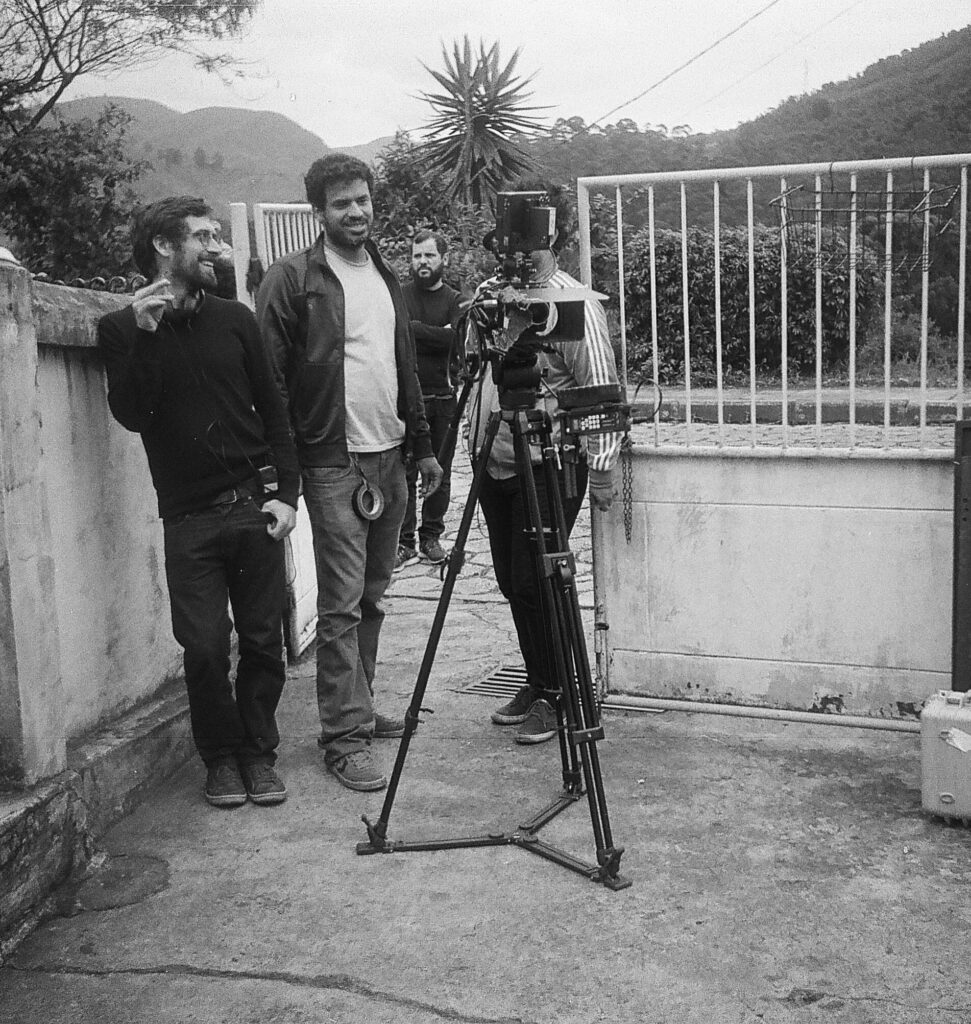
It was the first time I shot in Minas so I didn’t know anyone. On Affonso and João’s recommendation I worked with Bernardo Machado as Gaffer. It was a happy partnership. Bernard would work with me again numerous times, as first Camera Assistant, Gaffer, Steady or even additional cinematography. We work together to this day, when possible, because fortunately he has taken his own flights, shooting features and winning awards.
The project’s first Camera Assistant was Maurício Resende. Another fantastic person I only didn’t work with again because he pursued another profession and moved to another country. But my tendency is always to cultivate good partnerships, and repeat them in other projects.
The film has a layered narrative structure: André reading the diary versus Cristiano living the narrated story. Were there discussions with the directors about how to visually differentiate these two perspectives, or was the film approached in a more unified way?
It was a more unified approach, a junction of this “constructed naturalism” in the daytime scenes, and an intense use of diegetic lights in the nighttime ones.
“Araby” functions simultaneously as a character study and road movie. How did you visually construct Cristiano through the different locations he passes through?
I think for me, as a cinematographer, the key word for thinking about the question is “location.” I mean location not as that classic object of study we always do, of understanding the setbacks, light entries, grip equipment possibilities, etc. The thing is that it was through the film’s locations that I could, with cinematography, help in building the character and also in building this road movie dimension the film has.
I talked a lot about a certain constructed naturalism in daytime interiors, but it needed complementary thinking for the various road spaces we passed through. And the idea that emerged was in opposition (technically speaking) to the method used in the interiors: that is, the necessary gesture in these spaces was to assume and eventually intensify the characteristics of lights in what they have most personal: color and direction. This meant that if we were going to shoot at a roadside gas station full of old fluorescents with a green shift, the idea was to note that green, not correct it. And if at another moment we were going to shoot in some interior of some small town with some reddish source, the idea was to assume and eventually intensify that red. And thus practice a double operation: sew the false naturalistic character in a deeper way, and use the luminous differences of locations to help, even if in a subtle way in the viewer’s head, in this construction of a “transformation” of the character as they wander.
Finally, I’d like to ask you for two recommendations of Brazilian films for the audience to know, whether features or shorts.
“Lower City” (feature, Sérgio Machado), for its powerful photographic gesture, and “Ghosts” (short, André Novais), for all its beauty.
Where to watch Araby:

Film available on Embaúba Play platform
Credits
Direction and Screenplay: Affonso Uchôa, João Dumans
Executive Production: Vitor Graize, Thiago Macêdo Correia
Production Management: Marcella Jacques, Laura Godoy
Cinematography: Leonardo Feliciano
Art Direction: Priscila Amoni
Direct Sound: Gustavo Fioravante
Sound Design and Mixing: Pedro Durães
Assistant Director: Juliana Antunes
Camera Assistants: Bernard Machado, Maurício Rezende
Art Production and Assistance: Janaína Macruz
Casting: Silvia Andrade
Production Assistants: Vinícius Rezende, Camila Bahia
Original Score: Francisco César
Cast: Aristides de Sousa, Murilo Caliari, Glaucia Vandeveld, Renato Novaes, Adriano Araújo, Renan Rovida, Wederson Neguinho, Renata Cabral
Production: Katásia Filmes, Vasto Mundo
Associate Production: Pique-Bandeira Filmes
Country, year, runtime: Brazil, 2017, 96′
Rating: 16 years