Why we recommend it
In his adaptation of Ana Paula Maia’s first book from her trilogy, Marco Dutra creates a cosmic horror as personal in its anxieties and traumas as it is universal in its everyday apocalypse. The film navigates the middle ground between the Lovecraftian and the human, building terror not from the inexplicable, but from the silent inevitability of the end.
Review
Cosmic horror has never had much representation in Brazilian cinema. Even though this subgenre has made its mark in literature and comic books by Brazilian authors, the greatest exponent of our horror films remains, deservedly, Zé do Caixão (Coffin Joe), who, if characterized by these genre definitions, would be much more “folk horror.” But what would cosmic horror be? Basically, these are stories whose terror arises from human insignificance in the face of an immortal and indifferent universe. Our values, our feelings, our efforts, and even our own understanding of reality can do nothing against the ancient forces and intellects that roam the cosmos armed with a sublime disinterest in who we think we are. Fear comes from being confronted by something so distant from human reason that its very existence challenges ours. The work of American writer H.P. Lovecraft is the most representative of these themes, so much so that this subgenre is also called “Lovecraftian horror.” Perhaps that’s why Brazilian cinema has ventured little into these waters. It’s a very American approach. Our terror is much more people-based. When it ventures into the fantastic and supernatural, it focuses on beliefs and traditions or remote cultures of small communities – the foundations of what would be folk horror.
Still, there are some works in Brazilian cinema that flirt with these Lovecraftian themes. The shorts “A Menina de Algodão” (The Cotton Girl) and “Vinil Verde” (Green Vinyl), by Kleber Mendonça Filho, show effective horrors precisely because they are inexplicable. “Abraço de Mãe” (Mother’s Embrace), by Cristian Ponce, has direct references to Lovecraft’s work, and may be the most typical example of cosmic horror made in Brazil. But it is in director Marco Dutra’s work that this genre seems to find its true Brazilian format. Even in films like “As Boas Maneiras” (Good Manners) or “Todos Os Mortos” (All the Dead Ones), Dutra explores cultural and historical issues or classic horror tropes with unsettling strangeness. In “Quando Eu Era Vivo” (When I Was Alive), the nature of the haunting initiated by the protagonist’s mother is never really explained. These are films that navigate a middle ground between the cosmic and the folk, very personal and emotional stories that reinforce the strangeness of supernatural elements.
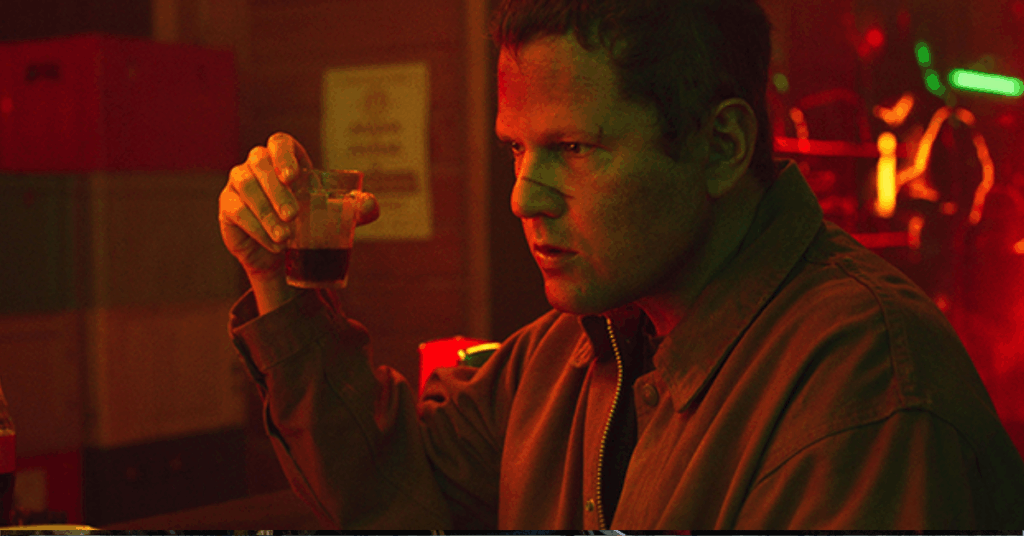
In his newest film, Dutra manages to reinforce this balance while delving deeper into references to cosmic horror and Lovecraft’s work. Based on the first book of the trilogy written by Ana Paula Maia, “Bury Your Dead” narrates the routine of Edgar Wilson (Selton Mello) in the small rural town where he works removing roadkill. His work partner is Tomás (Danilo Grangheia), an ex-priest, now excommunicated, who still wears the collar of his former profession and performs last rites for victims of car accidents. Besides Tomás, Edgar’s only company is his girlfriend Nete (Marjorie Estiano, who was also in “Mother’s Embrace,” making this her second foray into Lovecraftian territories), on whom he has great emotional dependence. In fact, Edgar seems to carry some kind of trauma that the film explores gradually, revealing truths about his past that he tries to forget, hiding them behind his quiet and taciturn demeanor. But the security of this simple life is threatened when Nete decides to join the sect to which her aunt Helena (Betty Faria) belongs, a strange religion that gradually began to infiltrate the city. What Edgar and Tomás begin to perceive is that this sect’s apocalyptic rituals have reflection in the real world. Not just in the behavior of people around them, but in reality itself.
“Bury Your Dead” then reveals itself as a story about the end of the world. It’s a very subtle kind of apocalypse, like a pot full of water that gradually heats up over the fire. And the people condemned to this fate cannot rationally perceive what approaches, they just surrender to a desperate fatalism, albeit mundane. Almost as if the barbarities of the characters’ daily lives began to escalate to an absurd level, while everyone pretends everything is normal. This is reflected in the story’s environments, like the plant where Edgar and Tomás take the dead animals, which has an industrial nightmare aesthetic that they simply ignore. Or the moment when the characters go to a large metropolitan area and find it empty. For Edgar, it’s as if the end of the world were a settling of accounts, the end of the calm life he created for himself. Selton Mello grants the character a somewhat stiff manner, like a shy child in an adult’s body. In a way, the character’s apparent childishness reflects that of humanity itself, incapable of understanding what is to come.
The film’s great virtue is fully surrendering to the bizarreness of the world it presents to us. And it does so without any fear of seeming ridiculous at times. However, it’s such a conceptual work that tries to do too much at once, which makes the story somewhat bloated and disconnected. It’s generally a bad sign when a film divides into several chapters, in which little seems to happen. Its characters are captivating, and tread paths that could lead to interesting places, but generally don’t. Perhaps that’s the objective, since it’s portraying an inescapable end of the world. But still, the film suffers somewhat from this lack of direction. As much as it has its disturbing moments, what this cosmic horror most lacks is, ironically, the horror.
Where to watch Bury Your Dead:

Credits
Director: Marco Dutra
Screenplay: Marco Dutra
Production: Rodrigo Teixeira, Lourenço Sant’Anna
Cast: Selton Mello, Marjorie Estiano, Danilo Grangheia, Betty Faria
Cinematography: Rui Poças
Production Designer: Ana Paula Cardoso
Editing: Bruno Lasevicius
Sound: Daniel Turini, Henrique Chiurciu
Production Company: RT Features
Co-Production: Globoplay
Distribution: O2 Play
Format: Feature / Fiction
Runtime: 128 minutes
Year: 2024
Country: Brazil
Language: Portuguese